

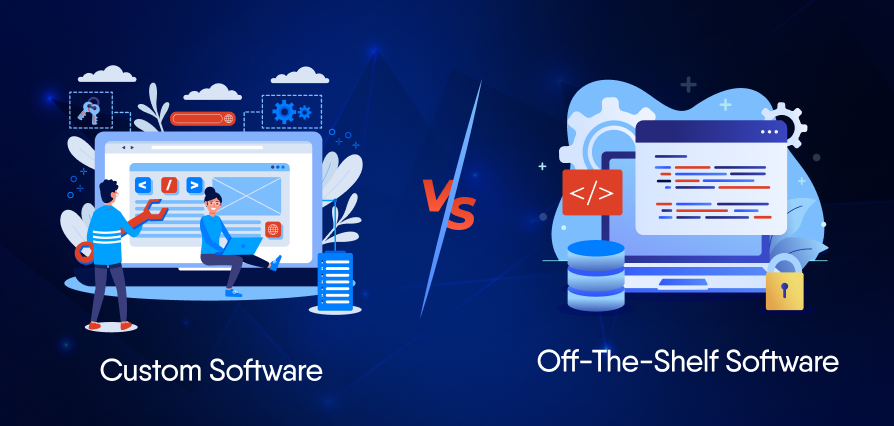
In 2026, software is no longer just a support function, it directly shapes how businesses operate, scale and compete. According to industry studies, more than 70% of digital transformation projects underperform due to poor software alignment, making the choice between custom software and off-the-shelf software solutions increasingly critical.
While off-the-shelf tools promise speed and affordability, many organizations experience limitations as they grow. On the other hand, businesses that invest in customized systems often gain stronger operational efficiency and long-term cost control. This guide explains the differences in clear, practical terms to help decision-makers choose the right solution with confidence.
What Is Custom Software?
Bespoke software is crafted to match the way your business operates, focusing on your goals, workflows, and unique challenges. Rather than making your team adjust to one-size-fits-all systems, it adapts to the way you actually work.
The custom software development process typically includes requirement analysis, system design, development, testing, and ongoing optimization. This approach is particularly prevalent in industries such as healthcare, logistics, and finance, where compliance, scalability, and security are non-negotiable requirements.
For example, a logistics firm struggling with delayed deliveries replaced multiple disconnected tools with a custom route optimization platform. As a result, the company achieved a 15–20% reduction in fuel costs, something standard software could not deliver without major compromises.
What Is Off-the-Shelf Software?
Off-the-shelf software refers to pre-built applications designed for mass adoption. These solutions are readily available, easy to deploy, and typically offered on subscription-based pricing models. They work well for standardized needs such as accounting, customer relationship management, and basic project tracking.
Research shows that nearly 60% of small businesses initially adopt off-the-shelf software due to low upfront costs and minimal setup requirements. However, limitations become evident as businesses scale.
A retail company using a generic inventory tool, for instance, may struggle with demand forecasting during peak seasons. Many organizations eventually supplement such tools with custom-built components to close functionality gaps.
For a broader strategic perspective, the Custom-built software solutions explain how customized systems support long-term digital success.
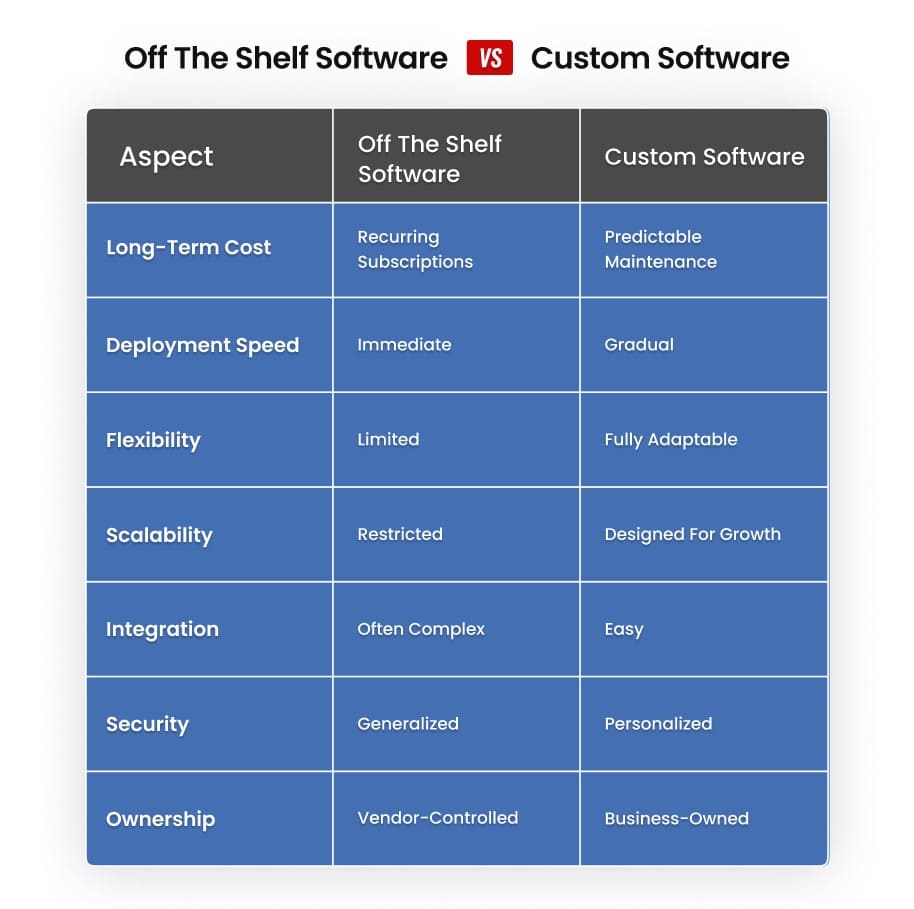
Detailed Comparison Of Bespoke Software vs Off-the-Shelf Software
This comparison highlights a fundamental difference: off-the-shelf software prioritizes convenience, while bespoke software prioritizes alignment and long-term control.
Bespoke Software Development Solutions: Is It Worth the Investment Over Pre-Built Software
Prebuilt software may seem cost-effective at first, but hidden expenses, such as rising subscription fees, paid add-ons, and costly integrations, can add up quickly. SaaS costs can grow 30 to 50 percent within three years.
Bespoke software require higher upfront investment but provides full control, transparency, and ownership. Businesses avoid recurring fees, gain scalable systems, and achieve long-term efficiency and savings.
Advantages and Limitations of Custom and Off-the-Shelf Software
Custom Software
Bespoke software development services are built specifically for your business, ensuring alignment with unique workflows and long-term goals.
Advantages
These are the benefits that make custom software a strategic choice for businesses aiming for growth and efficiency.
- Every feature is crafted to solve specific problems within your organization.
- It supports future growth without requiring a platform switch.
- Data flows smoothly across your business tools, improving efficiency.
- Reduces risk and ensures adherence to regulatory requirements.
- Investing upfront often pays off through efficiency and control.
Disadvantages
Some limitations may affect businesses as they grow or as they have specific needs.
- You may need workarounds or additional tools to meet your needs.
- May not support business growth or complex requirements.
- Often difficult to connect with existing systems without extra tools or middleware.
- Subscription fees and add-ons can add up over time.
- Relying on a third-party company for updates, features, and support limits control.
Off-the-Shelf Software
Pre-Built Software for general use provides a quick solution for standard business tasks.
Advantages
These features make off-the-shelf software a popular choice for companies needing speed and low upfront costs.
- Perfect for small businesses and startups looking for budget-friendly solutions
- Ready to use immediately, which saves implementation time.
- Keeps the system reliable without extra effort from your team.
- Widely used, tested, and stable software with a track record.
- Users can start using the software without specialized development knowledge.
Disadvantages
Some limitations may affect businesses as they grow or as they have specific needs.
- You may need workarounds or additional tools to meet your needs.
- May not support business growth or complex requirements.
- Often difficult to connect with existing systems without extra tools or middleware.
- Subscription fees and add-ons can add up over time.
- Relying on a third-party company for updates, features, and support limits control.
How Businesses Actually Decide in 2026
Many decision makers assume off-the-shelf software can be customized enough to meet evolving needs. In reality, most tools only allow surface-level configuration. This often forces teams to adapt workflows rather than improve them, reducing productivity.
Companies that invest in software development services see faster operational gains after deployment. For instance, a mid-sized eCommerce business reported a 40% improvement in order processing speed within six months of implementing a custom backend system.
Scalability is another decisive factor. Businesses with growth plans often find that generic tools cannot adapt quickly enough, which is why many organizations choose to hire software developers for scalable, tailored solutions.
The Rise of Hybrid Software Strategies
In 2026, many businesses adopt hybrid software strategies, combining off-the-shelf solutions for standard tasks with custom software development services for critical operations. This approach blends speed, reliability, and tailored functionality.
For example, a retail brand may run its storefront on an off-the-shelf eCommerce platform while integrating a custom inventory and analytics system. This ensures smooth software integration, boosts operational efficiency, and allows scalable growth.
By leveraging hybrid solutions, companies balance quick implementation with long-term control, making their software solutions adaptable to evolving business needs.
Choosing the Right Development Partner
When businesses transition toward custom solutions, selecting the right development partner becomes essential. Experience, technical expertise and post-launch support matter more than cost alone.
Many decision-makers consult resources such as Best Custom Software Development Companies In USA 2026 to identify reliable providers and reduce implementation risk.
Final Thoughts
The decision to use custom software compared with off-the-shelf software in 2026 is strategic rather than purely technical. Off-the-shelf tools deliver speed and simplicity, while custom solutions offer flexibility, scalability, and long-term value.
However, if you’re ready to implement a solution that fits your business perfectly, SolCoders can help. Whether you need a fully bespoke platform or hybrid integration with existing tools and provide end-to-end custom software development services that deliver measurable ROI.
SolCoders combines innovation and technology to deliver scalable, high-performance software solutions that streamline operations and accelerate digital transformation
In This Article
Frequently Asked Questions:
What is the main difference between custom software and off-the-shelf software?
Custom software is tailored to a business’s unique workflows and goals, while off-the-shelf software is pre-built with standard features for general use.
How long does it take to develop custom software?
Development time depends on project complexity from simple systems to large-scale, complex solutions, and SolCoders ensures timely delivery.
Is custom software worth the investment for small and medium businesses?
Yes, custom software might cost more upfront, but it gives your business the flexibility, scalability, and ROI you need to grow confidently.
Can off-the-shelf software be customized to fit my business needs?
Only basic configurations are possible. Advanced needs require software development services.
Related Blogs
Latest Blogs
Shopify B2B Wholesale: Complete Setup Guide, Features & How It Works
Blogs Software Development Shopify B2B Wholesale: Complete Setup Guide, Features & How It Works Shopify…
Shopify Functions Guide: Custom Discounts, Delivery and Payment Rules
Blogs E-commerce Development Shopify Functions Guide: Custom Discounts, Delivery and Payment Rules Shopify Functions Guide:…
Enterprise Application Integration: How it Transform Businesses
Blogs Software Development Enterprise Application Integration: How It Transforms Businesses Enterprise Application Integration: How It…