
- Blogs
- E-commerce Development
- How to Increase Average Order Value on Shopify: 8 Proven Strategies for 2026
- Blogs
- E-commerce Development
- How to Increase Average Order Value on Shopify: 8 Proven Strategies for 2026
How to Increase Average Order Value on Shopify: 8 Proven Strategies for 2026
- Published: Mach 10, 2026

Written By : Sualeha
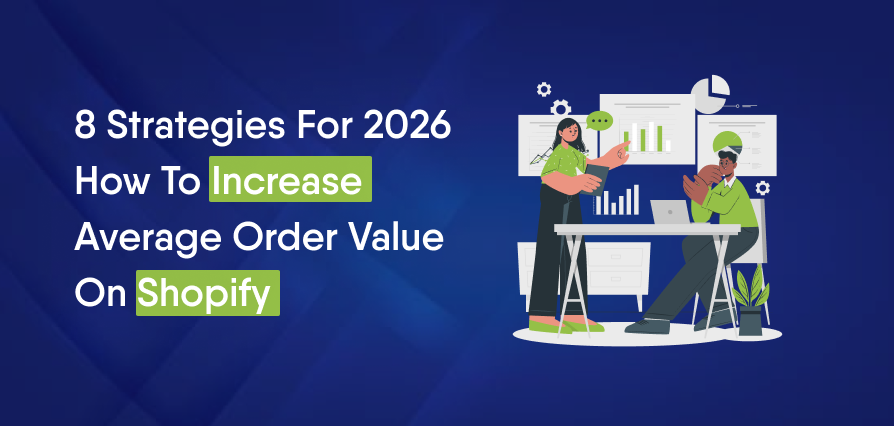
Increasing Average Order Value on Shopify is one of the fastest ways to grow revenue without increasing traffic or advertising spend. Instead of focusing only on acquiring new visitors, successful Shopify stores improve how much each customer spends in a single transaction.
Many merchants overlook this lever. They invest heavily in ads or SEO but ignore strategies that can lift Shopify AOV by 15–30% with relatively small changes to the store experience.
At Solcoders, we regularly help merchants implement systems that improve Shopify order value optimization, from smart upsells to checkout improvements. In this guide, you’ll get 8 strategies to start increasing AOV and improving long-term Shopify revenue growth.
8 Proven Strategies to Increase Average Order Value on Shopify in 2026
However, these tactics are arranged from the easiest to implement to the most advanced, so you can start seeing results this week and gradually scale to more advanced conversion rate optimization strategies over time.
1: Set a Free Shipping Threshold with a Progress Bar
Free shipping threshold strategies are the simplest and fastest way to lift your Shopify store revenue starting today.
Why the Threshold Works
Customers feel a psychological pull to complete a goal once they can see the finish line. 58% of shoppers add more items to their cart just to qualify for free shipping, making this one of the highest-ROI tactics in Shopify revenue growth.
How to Set the Right Threshold
Set your free shipping minimum at 20 to 30 percent above your current Shopify AOV. A real-time progress bar that says “You’re $12 away from free shipping” activates the goal-gradient effect and drives customers to add one more item before checkout.
Segmenting the Threshold by Customer Type
First-time buyers prefer lower thresholds that make getting started easy. For repeat and high-value customers, you can encourage higher thresholds with personalized messages that feel like a reward not a hurdle.
2: Product Bundling for Shopify
Turn “Should I buy?” into “Which bundle feels right for me?”. Smart Shopify bundles help customers see the best value instantly, making their choice easier while boosting your sales naturally.
The Psychology of Bundles
Bundles work through price anchoring. When a customer sees three individual products priced at $30 each alongside a bundle priced at $75, the savings feel obvious even if the margin is carefully protected. The perceived value of getting more for less is a powerful motivator.
Three Bundling Models That Work
- Fixed bundles work best for curated kits like skincare routines or electronics starter packs.
- Mix-and-match bundles give customers autonomy, which increases satisfaction and reduces returns.
- Build-your-own bundles work particularly well in fashion and wellness verticals where personalization matters.
Pricing Your Bundles for Maximum Impact
Offer a 10–20% discount on bundles versus individual products. Discounts above 20% may erode margins without significantly increasing Shopify AOV. Always display before-and-after pricing on the product page to make the value clear.
3: Shopify Upsell Strategies and Cross-Sell Techniques
Shopify upsell strategies and Shopify cross-sell techniques work best when placed at the right moment in the customer journey, not just anywhere in your store.
Pre-Purchase vs Post-Purchase Upsells
Pre-purchase upsells on product pages or in the cart work by catching customers while they are still in buying mode. Post-purchase upsells, shown after payment is confirmed, carry zero cart abandonment risk and typically see acceptance rates between 3 and 8 percent.
The Two-Option Rule
Never show more than two upsell options at a time. Too many choices trigger decision fatigue and result in the customer choosing nothing. A single well-matched recommendation like a compatible accessory or an upgraded version, consistently outperforms a long list.
Segmenting Upsells by Customer Type
- First-time buyers respond to low-risk add-ons worth less than 20 percent of the cart value.
- Repeat buyers are more likely to accept subscription offers or upgrades.
- High-value customers are the best audience for premium bundles and exclusive product drops
4: Loyalty Programs and Subscriptions as a Revenue Engine
Loyalty programs and subscriptions are not just retention tools. When built correctly, they directly increase Average Order Value on Shopify by giving customers a financial incentive to spend more per transaction.
How Points Thresholds Drive Bigger Baskets
49% of consumers spend more after joining a loyalty program, because earning points feels like getting paid to shop. Setting point milestones just above your average order amount encourages customers to add one more item to reach a reward.
Subscription Bundles That Grow AOV and LTV
Combining a subscribe-and-save model with product bundles locks in recurring revenue at a higher per-order value.
A wellness store, for example, can offer a monthly supplement stack subscription that saves 15 percent when buying individual products, increasing both Shopify AOV and customer lifetime value simultaneously.
Tier-Based VIP Programs
Tiered programs motivate customers to spend more per order to reach the next level. Bronze, Silver, and Gold tiers with increasingly valuable perks create a sense of status and belonging that keeps Shopify store revenue growing from your most loyal buyers.

5: Volume Discounts and Tiered Pricing
Tiered pricing gives customers a clear, logical reason to add more items to their cart, making it one of the cleanest drivers of Shopify order value optimization for consumable and replenishable product categories.
Structuring Tiers Without Hurting Margin
A simple three-tier structure works best. Buy one at full price, buy two and save 10 percent, buy three and save 15 percent. It encourages larger orders while keeping your bottom line protected, unlike traditional bulk discounts.
Best Product Categories for Volume Discounts
Consumables, apparel basics, supplements, and home goods respond best to volume pricing. Electronics and high-ticket items rarely benefit from volume discounts and should instead be paired with accessory cross-sells or warranty upsells as the primary Shopify revenue growth tactic.
6: Personalization and Smart Product Recommendations
Personalized shopping experiences are no longer a nice-to-have. They are the backbone of modern Shopify Conversion Rate Optimization Services because they make every customer feel like the store was built just for them.
Browsing-Based Recommendations
Using a customer’s browsing history to surface relevant products dramatically increases the chance of an additional purchase. “Complete the look” recommendations in fashion, or “frequently bought together” prompts in beauty, are both proven tactics that lift Shopify AOV.
BNPL and Add-On Services
Buy Now Pay Later options like Klarna and Afterpay reduce the psychological friction of higher purchase amounts, often increasing Shopify order value optimization by enabling customers to afford premium bundles and upgrades they would otherwise skip. Gift wrapping, personalized messages, and extended warranties serve the same function at a smaller scale.
Working With Experts to Implement Personalization
To implement advanced Shopify upsell strategies and recommendation engines effectively, working with professional Shopify development experts ensures your store is optimized for both sales performance and user experience.
7: Shopify UX Principles That Can Increase Average Order Value in 2026
Mobile accounts for over 70 percent of Shopify traffic, yet most Checkout optimization Shopify tools are designed primarily for desktop. Fixing your mobile UX is one of the most overlooked opportunities for Shopify revenue growth in 2026.
Sticky Add-to-Cart and Upsell Bars
A sticky bar fixed to the bottom of the mobile screen that shows the cart total alongside a progress indicator for the free shipping threshold is one of the most effective mobile-specific Shopify AOV tactics. It keeps the incentive visible without interrupting the browsing experience.
One-Tap Add-On Buttons at Checkout
On mobile, friction kills conversions. One-tap add-on buttons at the Shopify checkout page, pre-selected with the most commonly purchased complement, allow customers to accept an upsell without re-entering payment details or navigating away from the purchase flow.
Swipeable Bundle Cards
Replace static bundle tables with horizontally swipeable cards on mobile. Inspired by familiar social media scrolling, this design lets customers explore product bundles naturally, making the Shopify bundling experience feel seamless, intuitive, and engaging rather than forced.
Ongoing Support for UX Performance
Our Shopify store support services provide regular monitoring and updates to ensure your upsell and bundling strategies consistently boost Average Order Value on Shopify, adapting seamlessly as Shopify updates its platform and customer behavior evolves.
8: A/B Testing and Analytics Playbook for Shopify Vendors
Shopify vendors who test systematically outperform those who implement tactics blindly. A structured testing approach is what separates a 5 percent Shopify AOV lift from a 30 percent one.
Track Metrics
Tracking AOV alone is not enough. If a higher free shipping threshold increases AOV but drops your conversion rate, you may end up earning less overall.
Always measure Revenue Per Visitor (RPV = AOV x Conversion Rate) to get the true picture to optimize your Shopify checkout performance.
Step-by-Step A/B Testing
Start with a 30-day Shopify AOV baseline. Test one variable per round, run each for a minimum of two weeks with 100+ conversions, and evaluate AOV, conversion rate, and RPV before deciding the winning variant.
Using Shopify Cohort Analysis
Shopify’s customer cohort reports let you track Shopify order management changes by segment over time. This tells you whether your AOV improvements are coming from new customers, repeat buyers, or high-LTV accounts, so you can double down on what is working for each group.
Niche-Specific AOV Strategies for Shopify Stores
Generic advice only takes your Shopify store so far. The real growth comes when AOV strategy is tailored to your niche. Targeted tactics deliver far better results than one-size-fits-all approaches.
Fashion & Apparel
Outfit builder bundles and “Complete the Look” cross-sells are highly effective. Pair them with a free shipping threshold just above a full outfit’s cost to encourage customers to purchase the complete look in a single transaction, boosting average order value and enhancing the shopping experience.
Beauty & Skincare
Beauty stores see the best results with curated skincare bundles, subscription “save programs,” and sample add-ons. When positioned as professional routines rather than simple discounts, they enhance perceived value, build trust, and strengthen Shopify store revenue alongside lasting brand loyalty.
Electronics
Bundle devices with essential accessories, extended warranties, and setup service options. Electronics buyers are usually in a high-intent mindset, making these upsells highly effective for Shopify order value optimization, while ensuring customers get maximum value from their purchase.
Wellness & Supplements
Stacked product bundles and subscribe-and-save programs work exceptionally well in wellness. Present them as a “complete protocol” rather than just a multi-product discount to connect with customers’ health goals, encourage repeat purchases, and drive sustainable Shopify revenue growth.
30-Day AOV Implementation Roadmap
Rather than implementing all eight strategies at once, follow this structured roadmap to build momentum and measure results clearly from week one through to sustained Shopify store revenue growth.
Week 1: Quick Wins
Audit your current Shopify AOV benchmarks in Shopify Analytics and set a free shipping threshold 25 percent above your current average. Add a progress bar to your cart page. These two changes alone can produce measurable results within seven days.
Week 2: Bundles and Cross-Sells
Launch 1–2 product bundles of your top-selling SKUs and add cross-sell or upsell recommendations on high-traffic product pages. Highlight complementary items that are often purchased together to enhance the shopping experience.
Week 3: Post-Purchase and Loyalty Foundation
Set up your first post-purchase upsell and install a loyalty program app. Configure initial point thresholds and send a welcome email to existing customers announcing the program. This is where Shopify order management starts working in your favor to drive repeat-purchase revenue.
Week 4: Mobile Audit and First A/B Test
Run a full mobile UX audit on your cart and checkout pages. Fix the top friction points identified and launch your first A/B test on either the free shipping threshold or your primary bundle pricing. Track RPV as your primary KPI throughout.
Month 2 and Beyond
Expand into segmented upsell campaigns, niche-specific bundle iterations, and subscription program development. Ongoing Shopify store support through regular audits and testing cycles is what compounds these gains into sustained Shopify revenue growth over time.
Common AOV Mistakes That Kill Your Results
Understanding what not to do is just as important as knowing what drives results. These are the most common errors we see across Shopify order management and AOV optimization projects.
Overgeneralized Discounts
Giving a flat discount across your store rewards buyers who don’t need it and directly cuts profit. Use relevance-driven upsells or product bundles to boost Shopify AOV safely.
Irrelevant cross-sells
Recommending a phone case to someone buying a coffee mug destroys trust. Relevance is the only filter that matters.
Ignoring mobile UX
An upsell widget covering the add-to-cart button on mobile will severely hurt conversions instead of boosting them.
No A/B testing
Assuming a tactic works without testing can keep you running an underperforming strategy for months. Always test, measure, and optimize to achieve real results.
Optimizing AOV without tracking margin
Revenue can rise while profit declines. Always track margin impact alongside Shopify AOV gains to ensure strategies are truly profitable.
Final Thoughts
Growing your per-order revenue is not about a single tactic, but a connected system where psychology, segmentation, UX, and testing work together to make every transaction more valuable.
Ready to scale faster? The team at SolCoders can help implement every strategy in this guide. Get in touch today and let us build a store that earns more from every order.
SolCoders combines innovation and technology to deliver scalable, high-performance software solutions that streamline operations and accelerate digital transformation
In This Article
Frequently Asked Questions:
What is Average Order Value (AOV)?
AOV is total revenue divided by the number of orders over a set time period. It tells you the average dollar amount a customer spends per transaction on your Shopify store.
How to calculate AOV inside Shopify?
Go to Shopify Admin, click Analytics, then Reports, and select Sales Overview. Your AOV is displayed as a key metric. For granular data by traffic source or customer segment, use Custom Reports in Shopify Plus.
Why does Average Order Value matter to profitability?
AOV growth boosts revenue without needing more traffic or conversions. Every extra dollar per order largely increases your bottom line after covering costs.
How to boost Average Order Value?
Quick wins include free shipping thresholds with progress bars, product bundles, and post-purchase upsells. Adding AI personalization, loyalty tiers, and BNPL can drive compounding long-term growth.
What are the best upsell strategies for Shopify stores?
Premium item upsells, complementary product cross-sells, and post-purchase one-click offers are Shopify’s top upsell strategies in 2026.
What is the rule of 40 in Shopify?
Adapted from SaaS, the Rule of 40 means revenue growth plus profit margin should equal or exceed 40. For Shopify merchants, it indicates whether growth is efficient or costly.
What is a good Shopify AOV benchmark?
Most successful Shopify stores average $50–$100 per order, while high-ticket brands exceed $150. Focus on upsells, bundles, and post-purchase offers to grow AOV and boost profits.
Related Blogs
Latest Blogs
Shopify B2B Wholesale: Complete Setup Guide, Features & How It Works
Blogs Software Development Shopify B2B Wholesale: Complete Setup Guide, Features & How It Works Shopify…
Shopify Functions Guide: Custom Discounts, Delivery and Payment Rules
Blogs E-commerce Development Shopify Functions Guide: Custom Discounts, Delivery and Payment Rules Shopify Functions Guide:…

Enterprise Application Integration: How it Transform Businesses
Blogs Software Development Enterprise Application Integration: How It Transforms Businesses Enterprise Application Integration: How It…