
Solcoders

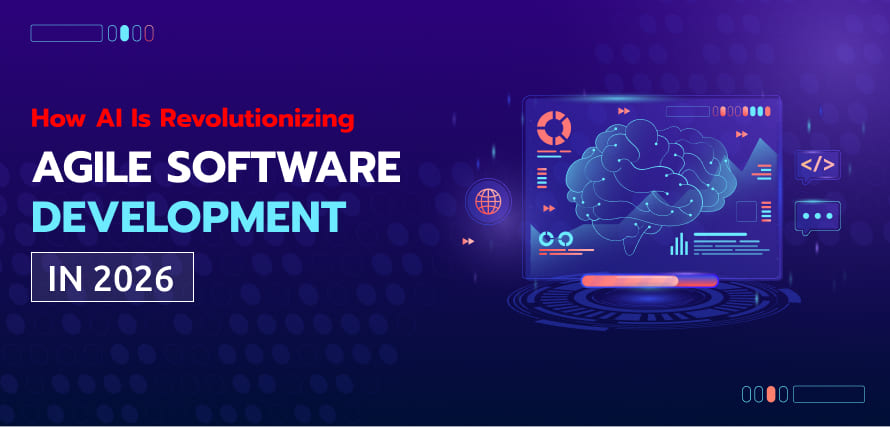
How AI Is Revolutionizing Agile Software Development in 2026

How AI Is Revolutionizing Agile Software Development in 2026

image 1880 1

Written By : Sualeha

Seo Executive

Agile Software Development in 2026

Agile software development continues to evolve rapidly in 2026 as AI-driven software development reshapes how development teams design, test, and deploy applications.

Modern Agile environments are evolving beyond traditional step-by-step coding and sprint cycles. By leveraging Large Language Models (LLMs), AI-driven automation, and cloud platforms like AWS, Azure and GCP.

However, development teams can optimize sprints, enhance code quality, and proactively predict potential issues before they impact delivery.

This blog explores practical strategies, tools, and next-gen solutions that redefine software development in 2026.

The Evolution of Agile Software Development with AI

Artificial intelligence is transforming Agile development workflows by reducing manual workload and improving decision-making across software projects. 

Traditionally, Agile teams relied heavily on human judgment for sprint planning, backlog prioritization, and testing processes. AI-driven software development now enhances these workflows through automation and predictive insights.

From Traditional Agile to AI-Enhanced Agile Workflows

Modern Agile teams use AI-driven project management tools to automate sprint planning, task distribution, and workflow monitoring. 

These intelligent tools analyze historical project data, team performance metrics, and delivery timelines to predict bottlenecks and recommend optimized task allocations.

Workflow automation in Agile Software allows developers to focus on high-value coding and innovation while AI manages repetitive administrative processes. AI also supports Scrum and Kanban teams by:

  • Automating backlog prioritization.
  • Predicting sprint completion timelines.
  • Monitoring team productivity trends.
  • Identifying potential development risks early.

Benefits of AI in Agile Software Development

Integrating AI into Agile Software Development provides measurable improvements across software lifecycles.

Faster Development Cycles

AI-powered code generation and automated development tools significantly reduce manual coding efforts. Teams can accelerate feature releases while maintaining development accuracy.

Improved Code Quality

AI-enhanced code review systems identify vulnerabilities, inefficiencies, and security risks during development. Machine learning models analyze code patterns to suggest improvements and maintain consistency across projects.

Intelligent Quality Assurance

AI-driven testing tools automate regression testing, unit testing, and performance testing. Automated QA processes minimize human errors while ensuring consistent software quality.

Version Control Optimization

AI integration with version control systems like GitHub and GitLab helps maintain repository stability, detect conflicts, and streamline collaboration among distributed teams.

Organizations that combine Agile methodologies with AI automation achieve higher productivity, faster deployment cycles, and more reliable software delivery.
AI transforming Agile software

Key Tools Used in Agile Software Development with AI

Modern Agile teams rely on several AI-powered tools and platforms to optimize development processes.

AI-Powered Testing 

Automated regression testing tools accelerate quality assurance cycles while predictive failure analysis identifies potential software vulnerabilities before deployment.

Cloud-Based Development Platforms

Platforms such as AWS, Microsoft Azure, and Google Cloud provide scalable infrastructure for AI-driven Agile projects. These platforms support continuous integration, deployment pipelines, and real-time performance monitoring.

Machine Learning Development Pipelines

Machine learning pipelines automate data processing, code optimization, and performance analysis, allowing teams to deliver scalable software efficiently.

Predictive Analytics Tools

Predictive analytics platforms analyze project data to optimize sprint velocity, forecast development timelines, and improve resource allocation.

AI Software Automation in Modern Development

AI software automation accelerates development cycles by reducing repetitive tasks and enabling seamless integration across platforms. Here’s how automation is reshaping modern software development for Agile teams.

Automating Repetitive Tasks

AI software automation eliminates tedious, repetitive tasks such as manual code formatting, dependency updates, and unit testing. 

SDLC automation enables automated builds, deployments, and testing. This frees developers to focus on innovation, reduces errors, and accelerates delivery cycles, ensuring Agile teams can meet aggressive deadlines without compromising quality.

Predictive Analytics and Bug Detection

AI tools now use predictive models to identify risky code changes and potential failure points. AI bug detection tools analyze historical commits to anticipate errors.

With predictive bug detection, Agile teams proactively address issues, minimizing downtime and ensuring robust software performance.

AI in Continuous Integration and Deployment (CI/CD)

Cloud-based CI/CD pipelines integrate AI to optimize build, test, and deployment workflows. Automated pipelines reduce downtime, ensure consistent releases, and improve deployment speed. 

AI continuously monitors deployments and suggests workflow improvements, enabling Agile teams to respond dynamically to project requirements.

Agentic AI

One emerging trend, Agentic AI, allows software systems to autonomously make decisions, evaluate risks, and execute tasks without constant human oversight. 

Integrating Agentic AI in Agile projects enhances sprint planning, resource allocation, and workflow optimization, empowering development teams to focus on innovation and high-value tasks.

Partner with Us to simplify processes, improve outcomes and accelerate success.

Machine Learning Integration for Smarter Development

Machine learning integration ensures higher code quality, predictive bug detection, and optimized Agile delivery for modern software projects. Let’s dive into how ML enhances development workflows and decision-making.

Enhancing Code Quality with ML

ML models enhance code quality by analyzing patterns, detecting anomalies, and suggesting improvements.

AI-enhanced code review improves maintainability and reduces errors. Teams can identify potential problem areas before code reaches production, ensuring more stable and scalable software.

Automated Software Integration

Modern development environments rely on APIs, microservices, and third-party tools. Automated software integration ensures these components connect seamlessly, reducing downtime and integration errors.

Agile teams benefit from continuous synchronization between services, improving productivity and software reliability.

AI-Driven Decision Making

AI supports strategic decision-making in Agile development, including sprint forecasting, workload balancing, and resource allocation. 

Using AI in DevOps workflows, teams can predict project risks, optimize task assignments, and increase sprint efficiency, reducing wasted effort and improving overall delivery timelines.

Next-Gen Software Development Solutions

Next-gen software development solutions leverage AI, ML, and automation to create smarter, scalable, and future-ready software, using innovative engineering approaches that are shaping the future of software.

Large Language Models (LLMs) Development

LLMs assist developers by generating code, refactoring existing scripts, and automating repetitive tasks. They reduce manual coding, minimize errors, and accelerate project timelines. LLMs also improve documentation, enhance code readability, and streamline onboarding for new developers, making them invaluable for Agile teams.

Cloud-Based AI Platforms for Agile Teams

Cloud platforms like AWS, Azure, and GCP provide scalable infrastructure for AI-driven projects. Teams can leverage AI-driven project management tools, real-time monitoring, and automated deployment pipelines. Cloud solutions integrate seamlessly with Agile workflows, improving collaboration, performance tracking, and team efficiency.

Intelligent QA and Testing\

AI-powered QA automation ensures faster and more reliable testing. Automated test cases, regression testing, and predictive failure analysis detect issues before production, reducing bugs and improving software stability. 

Agile teams can allocate human testers strategically, combining automation with expert oversight for maximum efficiency.

AI-Powered Agile Development Best Practices

Agile development best practices combined with AI tools enhance team productivity, sprint efficiency, and overall project quality. Let’s examine the best practices for making AI-powered Agile workflows truly effective.

Scrum and Kanban Optimized with AI

AI enhances Agile methodologies:

  • Predicting sprint completion and backlog bottlenecks.
  • Prioritizing tasks with AI insights.
  • Real-time performance tracking for distributed teams.
  • Automating Kanban board updates and workflow adjustments.

Maintaining Human Oversight

While AI accelerates processes, human supervision is crucial. QA teams ensure automated decisions align with project goals, ethical standards, and quality benchmarks. Combining human testers with AI tools maintains balance, optimizing both speed and accuracy.

Measuring Performance and ROI

AI dashboards track productivity metrics, bug reduction, deployment success, and team efficiency. These insights allow Agile teams to continuously refine workflows, improve ROI, and demonstrate the tangible benefits of AI-driven software development.

Challenges and Considerations

While AI enhances development, challenges like data privacy, model complexity, and system integration must be carefully managed. Here’s what teams need to keep in mind to overcome these obstacles.

Data Privacy and Security

AI workflows process sensitive code and project data. Proper encryption, access control, and compliance with security standards are essential to protect intellectual property.

Managing AI Complexity

Teams must understand AI models and tools to benefit from automation. Training and model maintenance introduce complexity, but the long-term productivity gains outweigh these challenges.

Integration with Legacy Systems

Many organizations rely on legacy software alongside modern tools. Automated software integration bridges these systems, ensuring continuity by adopting AI-enhanced workflows.

Integrate AI seamlessly into your projects. Let SolCoders optimize your Agile workflows.

The Future of AI in Agile Software Development

Looking beyond 2026, AI will transform software development with fully predictive sprints and AI-driven resource allocation, making workflows smarter, faster, and more efficient.

Leveraging large language models (LLMs) can automate code generation and testing, reducing manual work and accelerating delivery.

AI will drive end-to-end development automation from planning to deployment while optimizing performance, scalability, and predictive maintenance. This allows teams to focus on innovation, creating more reliable and future-ready software solutions.

Final Thoughts

Agile Software Development is evolving rapidly with artificial intelligence, automation, and machine learning reshaping modern development workflows.

By integrating AI-driven tools into Agile workflows, organizations can improve code quality, reduce manual workload, and accelerate product releases while maintaining scalability.

Businesses adopting AI-enhanced Agile methodologies gain a competitive advantage through smarter project management and faster development cycles. Partnering with Solcoders helps organizations implement AI-powered Agile workflows, enabling efficient deployment and future-ready software solutions

SolCoders combines innovation and technology to deliver scalable, high-performance software solutions that streamline operations and accelerate digital transformation

In This Article

    Frequently Asked Questions:

    What is Agile Software Development?

    Agile Software Development is an iterative and collaborative development methodology that focuses on continuous testing, rapid delivery, and flexible project planning.

    It reduces repetitive tasks, predicts bugs, and streamlines workflows, improving sprint efficiency and delivery speed.

    Yes. ML analyzes code patterns, detects errors, and optimizes performance before deployment.

    It enables faster, reliable, and error-free integration of tools, services, and APIs.

    Agile teams use LLMs, predictive bug detection, CI/CD automation, and AI-powered code review to streamline development and improve quality.

    Related Blogs

    Book a 30-minute call with our experts.

    How much does Software Development Cost in 2026?

    How much does Software Development Cost in 2026

    image 1880 1

    Written By : Sualeha

    Seo Executive

    Software Development Cost

    The software development cost in 2026 aren’t fixed, it depends on project complexity, features, technology stack, and the business problem it solves. 

    From startups launching a new SaaS product to enterprises modernizing legacy systems, each project has unique requirements, budget considerations, and expected outcomes. Understanding these factors helps you invest smarter, reduce waste, and build ROI-focused custom software solutions.

    In this guide, we break down the real factors affecting bespoke software pricing, compare it to off-the-shelf alternatives, and explore strategies to maximize value while minimizing cost.

    Core Components That Affect Software Development Cost

    Several factors determine how much a custom software project will cost, from complexity to the expertise of the team delivering it.

    Project Complexity and Scope 

    Software development project pricing grows with features, integrations, and workflows. Simple tools cost less, while AI-powered platforms with analytics, automation, and compliance start at $50K and can exceed $250K. Poor scope management risks wasted investment and technical debt.

    Technology Stack and Infrastructure

    Modern custom software relies on AI, cloud, APIs, and real-time data to improve efficiency and scalability, which increases bespoke software pricing due to specialized development and testing. 

    By 2026, 91% of software companies will use AI in planning, coding, or testing, with SaaS platforms needing secure, scalable architecture from day one.

    Team Size & Expertise

    A small MVP may need only a few developers, while enterprise systems require full teams, developers, QA engineers, UI/UX designers, and project managers. 

    In 2026, experienced engineers with AI and compliance expertise in the US charge $150–$220/hr, while mid-level developers average $100–$150/hr, directly impacting software development cost.

    Timeframe & Delivery

    Tight deadlines increase cost. Faster delivery often means larger teams or parallel development, which raises the overall budget. 

    About 52.7% of software projects exceed budgets, highlighting the need for planning, scope control, and strong project management. Longer projects ease upfront pressure but demand sustained investment and careful management.

    Regional & Hybrid Approach 

    Adopting a hybrid model, with US-based senior engineers handling architecture and offshore developers executing tasks, can reduce costs by 20–30% while maintaining high quality. This approach is increasingly common for startups and mid-size enterprises.

    Scalable Software Caption

    Software Development Pricing Models: Which One Is Right for You?

    Every software development company prices differently. Understanding pricing structures helps you choose a model that matches your business requirements and risk tolerance.

    1. Fixed-Price Model

    Best for projects with clearly defined requirements, where costs are mostly predictable, though any additions or changes in scope can increase the budget

    2. Hourly or Time-Based Model

    Ideal for projects with evolving requirements. Flexibility comes with the need for close oversight to manage hours and prevent budget overruns.

    3. Dedicated Development Team Model

    Used by growing startups or long-term projects. A dedicated team works exclusively on your software, balancing scalability, efficiency and ROI.

    Breaking Down Software Costs

    A major challenge in custom software development is knowing where your budget goes. While costs vary, the main drivers are predictable and help you plan smarter.

    Cost Breakdown

    Even without exact figures for every project, the main contributors to a bespoke software budget are predictable:

    Development Hours 

    Most bespoke software pricing comes from skilled engineers, designers, QA testers, and project managers.

    Costs vary by project complexity and tech stack. US senior engineers charge $150–$220/hr, mid-level $100–$150/hr, while offshore talent can cut costs 20–30% without sacrificing quality.

    Technology Stack & Integrations  

    AI, cloud infrastructure, real-time data, and third-party API integrations significantly impact cost. Complex tech can increase total spend by 30–50% compared to basic tools.

    SaaS projects or enterprise dashboards often require robust scalability and security, which are critical but cost-intensive.

    Maintenance & Support   

    Development doesn’t end at launch. Ongoing updates, security patches, cloud hosting, and support services are essential for smooth operation, compliance, and longevity.

    These usually add 15–25% of the initial development cost annually. Ignoring maintenance can compromise performance, security, and ROI.

    Contingency Budget  

    Every software project encounters unforeseen challenges, from compliance requirements to integration issues or scope changes. 

    Industry best practices recommend budgeting a 20–30% contingency buffer to mitigate risks, ensuring projects remain on track without sudden overspend.

    Maximizing ROI With Custom Software in 2026

    While bespoke software may appear expensive upfront, its return often outweighs off-the-shelf alternatives over time:

    Boost Operational Efficiency

    Software personalized to your workflows eliminates redundant tasks, reduces manual effort, and accelerates operations. Businesses can save hundreds of hours per year, translating directly into labor cost reductions.

    Automation & Accuracy

    AI-powered or automated processes minimize human errors, which can reduce operational losses by up to 40%. Accurate data collection and analysis also improve decision-making and forecasting.

    Long-Term Savings

    Off-the-shelf software may seem cheaper initially, but recurring subscription fees, upgrade costs, and customization workarounds add up over time. Custom solutions avoid these hidden expenses and provide predictable total ownership costs.

    Flexible Growth & Adaptability

    Bespoke software grows with your business. Adding new features, users, or integrations can be done seamlessly, reducing the need for costly redevelopment or technical debt.

    Why This Matters for Your Budget?

    Understanding the true cost structure enables you to align your software investment with measurable business outcomes, build smarter budgets, negotiate effectively with development teams, and communicate expected ROI, such as:

    • Higher productivity and accuracy.
    • Fewer subscription costs tied to user counts.
    • Greater control over security, integrations, and future upgrades.
    • Predictable maintenance spending rather than unpredictable vendor price hikes.
    Invest wisely in software that scales. SolCoders ensures value at every step.

    ROI of Custom Software Over Off-the-Shelf Solutions

    Custom vs Off-the-Shelf software is as much about ROI as upfront cost.

    Custom software aligns with your business processes, reducing errors and inefficiencies. It can deliver up to 290% ROI in 2–3 years by automating workflows and removing unnecessary subscriptions.

    To understand why custom software delivers better ROI, consider factors like scalability, workflow alignment, and total cost of ownership (TCO). Costs include maintenance (15–25%), cloud hosting ($2K–$50K), third-party services ($1K–$20K), and security audits ($5K–$30K). Prioritizing TCO boosts long-term ROI. 

    How to Reduce Software Development Cost Without Losing Quality?

    Poor planning and uncontrolled project scope cause 40% of software initiatives to fail. Discover methods to maximize your software investment. 

    Prioritize an MVP (Minimum Viable Product)

    Start small, validate fast. Launching a lean MVP helps you gather user feedback early and avoid building unnecessary features. Each validated iteration compounds your software ROI.

    Align Technology with Long-Term Goals

    Select a framework that aligns with your business goals, scalability, and maintenance capacity. Smart infrastructure reduces technical debt and costly migrations later.

    Integrate Analytics from Day One

    Adding built-in analytics or dashboards turns your software into a measurable asset. Track user behavior, feature adoption, and ROI metrics to justify ongoing development.

    Agile Project Management for Better Results

    Clear communication channels between your team and the development partner prevent costly misunderstandings. Agile sprints, progress demos, and transparent reporting are essential.

    Upgrades & Support 

    Budgeting only for development is a common mistake. Regular updates, dependency management, and new feature releases ensure your investment stays relevant and secure.

    Software Automation 

    AI-driven code assistants, testing frameworks, and DevOps automation can significantly reduce time-to-market. Forward-thinking software development companies already use AI to improve quality while lowering costs.

    Affordable software solutions, premium results. Start your project with Solcoders.

    Final Thoughts

    Estimating software development costs in 2026 requires understanding project complexity, tech stack, team structure, and long-term ROI. While upfront investment may seem high, ROI-focused software solutions outperform off-the-shelf tools in efficiency, scalability, and cost savings.

    Partnering with experienced agencies like Solcoders ensures your software meets business requirements, minimizes technical debt, and maximizes ROI.

    SolCoders combines innovation and technology to deliver scalable, high-performance software solutions that streamline operations and accelerate digital transformation

    In This Article

      Frequently Asked Questions:

      How much does software development costs in 2026 for startups?

      For startups in 2026, costs range from $25K–$100K for a basic MVP, $80K–$200K for a medium app, and $200K+ for complex software, depending on features and tech stack.

      Yes. Custom software offers tailored features, scalability, and flexibility, giving startups a competitive edge, while off-the-shelf tools may limit growth and customization.

      AI cuts development time and costs via automation but adding complex AI features can raise upfront expenses.

      Yes, by building an MVP, using open-source tools, outsourcing smartly, following agile, planning clearly, and automating testing, startups can cut costs without sacrificing quality.

      ROI from software depends on cost-effectiveness, implementation speed, usability, adaptability, upkeep, operational efficiency, and alignment with business needs.

      Related Blogs

      Book a 30-minute call with our experts.

      Top Software Development Trends in 2026

      Top Software Development Trends in 2026

      image 1880 1

      Written By : Sualeha

      Seo Executive

      software development trends 2026

      In 2026, staying competitive requires adopting the latest software development trends. Customized Business Software Solutions helps companies create tools that fit their exact needs. Companies using modern software can serve customers faster and run smoother operations.

      Digital transformation continues to accelerate globally. Enterprises adopting AI, cloud platforms, and workflow automation are seeing measurable improvements in productivity and revenue. 

      By 2026, over 60% of enterprises will invest in customized enterprise software solutions. This article covers the top software development trends shaping the future of business technology and explores the list of leading software companies in the USA that help businesses adapt, scale, and succeed.

      software trends Caption

      How 2026’s Software Trends Transform Business Operations?

      Here we describe how these software trends help businesses innovate, scale efficiently, and stay competitive in an ever-evolving digital landscape.

      AI-Powered Software for Smarter Decisions

      AI and machine learning are changing how companies use software. By 2026, AI-powered software will analyze data, predict trends, and automate routine tasks. Around 70% of enterprises are expected to adopt these solutions this year.

      Tools like GitHub Copilot or OpenAI’s Claude help developers write, debug, and test code faster, reducing errors and allowing teams to focus on high-value features.

      Integrating AI in Software Development 

      Modern software solutions now integrate AI in ways that directly improve business outcomes:

      • Predictive analytics for market and sales trends
      • Personalized customer experiences and recommendations
      • Fraud detection in financial applications

      Through custom software product development services, companies can add AI modules that enhance efficiency. 

      Automated software integration ensures these tools connect smoothly with existing systems such as CRM, ERP, or analytics platforms, enabling faster, smarter decisions.

      The Role of User-Centered Software Design

      A strong custom software design ensures AI is integrated naturally into workflows. Businesses that focus on design principles see higher adoption rates and better long-term ROI.

      AI enables businesses to work smarter by automating tasks and delivering actionable insights. 

      • Faster, data-driven decision-making
      • Personalized customer experiences
      • Reduced repetitive manual tasks
      • Predicting trends to support business growth

      Real-World Applications  

      Retailers are using AI in custom software to forecast inventory and optimize stock levels. One company reported a 30% drop in stock outs after implementation. Other common applications include:

      • Chatbots for 24/7 customer support
      • Predictive maintenance in manufacturing
      • AI-powered financial risk analysis
      • Recommendation engines for e-commerce

      Why AI is Essential in 2026?   

      AI is now a core requirement. Organizations that implement software product development services with seamless automated software integration and smart custom software design achieve a real competitive edge.

      Cloud-Native Scalable Enterprise Solutions

      By 2026, over 90% of enterprises will rely on cloud systems for critical applications. Cloud-native software automatically scales and reduces infrastructure costs, making it essential for businesses that want to stay competitive.

      A dedicated software development team can build cloud platforms for SaaS applications, mobile apps, and web applications. Cloud solutions enable quick and secure updates, minimize downtime, and ensure smooth day-to-day operations.

      Centralized Data and Performance

      Cloud-native platforms centralize business data, enhance system performance, and reduce latency, enabling business software optimization by maintaining continuous efficiency and deploying updates automatically without disrupting operations.

      Microservices and API-First Architecture

      Modern cloud systems favor microservices and API-first designs, allowing businesses to integrate new features seamlessly without overhauling existing systems.

      Event-Driven Microservices (EDA) for Flexibility

      Event-driven architectures provide modularity and scalability, giving businesses the flexibility to adapt systems as they grow.

      Advantages of Cloud-Native Software

      • Easily scale to accommodate more users
      • Access applications from anywhere
      • Centralized security monitoring
      • Seamless integration with AI and analytics tools
      Key Examples
      • Banks are approving loans faster and more securely
      • Retailers providing real-time stock updates across locations
      • Healthcare providers managing patient data remotely

      On-Demand Cloud Functions

      Enterprises increasingly use edge computing to process data closer to the source, reducing latency for IoT and mobile applications. On-Demand Cloud Functions optimize costs by automatically scaling and charging only for actual usage.

      Low-Code & Rapid Application Development Platforms

      Low-code platforms enable rapid prototyping, letting teams build, test, and update apps quickly. The market is projected to reach $25 billion by 2026.

      They streamline repetitive tasks across departments and support custom automation, connecting systems smoothly.

      Key benefits:

      • 30–40% faster time-to-market

      • Lower development costs

      • Quick adaptation to market changes

      • Easy integration with existing systems

      A logistics company built a low-code tracking app in just three weeks, delivering live updates and reducing manual inquiries by 50%.

      Low-code platforms are perfect for enterprises experimenting with new software ideas without long development cycles.

      Cybersecurity-First Software Design

      Security is a top priority for businesses. In 2026, over 60% of enterprises will embed security during software development. While software development pricing may increase, the benefits are significant.

      Features of Cybersecurity-Driven Software

      Secure custom software now includes essential features such as:

      • Zero-trust architecture to minimize unauthorized access

      • End-to-end data encryption to protect sensitive information

      • Multi-factor authentication for stronger login security

      • Real-time threat monitoring to detect attacks instantly

      • Automated compliance with standards like GDPR, HIPAA, and ISO 27001

      Protecting Patient Data

      Healthcare providers rely on secure custom software to manage patient data efficiently. Doctors can access records remotely without compromising security. A cybersecurity-first design reduces the risk of data breaches and strengthens patient trust.

      Advantages of Secure Software

      Companies that prioritize security in their software development gain:

      • Regulatory compliance and readiness for audits

      • Protection of intellectual property

      • Reduced financial risk from cyber threats

      • Enhanced customer confidence and trust

      Automation & Intelligent Workflow Integration

      Automation is a cornerstone of modern business efficiency. Business process automation software leverages AI to streamline operations, reduce human errors, and optimize workflows.

      By integrating machine learning (ML), systems can learn from historical data and improve predictions over time.

      Common Applications of Automation

      Automated invoicing, accounting, and HR reduce errors, predictive alerts keep supply chains on track, AI chatbots boost customer support, and predictive maintenance cuts downtime while extending equipment life.

      Automation also enables software integration, linking systems across departments for smoother collaboration. Incorporating ML enhances decision-making by learning from past data to optimize outcomes.

      Key Benefits of Hyper-Automation
      • Save up to 50% of time on repetitive tasks
      • Reduce errors in daily operations
      • Free employees to focus on strategic initiatives
      • Improve customer response times
      Real-World Impact of Automation

      Manufacturing company added predictive alerts to its maintenance schedule, cutting downtime by 40% and saving millions yearly. Similarly, retailers use automation to adjust pricing and stock based on demand, boosting profitability.

      Automation for Faster Decision-Making

      Automation also enables faster business decisions. AI-powered DevOps monitors systems, predicts failures, and applies fixes automatically, reducing downtime, speeding releases, and helping businesses respond to market changes faster than competitors.

      Simplify processes and boost productivity with Solcoder’s smart software solutions designed for your success.

      Blockchain Integration for Enterprise Software Security 

      Blockchain is no longer limited to cryptocurrency, it is now a key part of enterprise software. Businesses use blockchain for secure, transparent, and traceable transactions. 

      Smart contracts automate agreements, while decentralized ledgers reduce fraud and increase trust across the supply chain.

      Key Use Cases:

      • Supply chain verification and traceability

      • Secure financial transactions

      • Intellectual property protection

      • Decentralized identity management.

      Extended Reality (XR) for Immersive Enterprise

      XR technologies like AR, VR, and MR are transforming enterprise applications. From training to collaboration and visualization, XR enhances efficiency and engagement.

      Enterprise Applications:

      • Immersive employee training simulations

      • Virtual product demonstrations for customers

      • Remote collaboration in interactive environments

      • Advanced data visualization for complex analytics

      Predictive Analytics for Hyper-Personalized Experiences

      Predictive analytics helps companies deliver AI-driven, hyper-personalized experiences. Businesses using predictive analytics have reported 20–30% higher engagement and repeat purchases.

      Proactive Insights:

      • Personalized marketing campaigns

      • AI-based product or service recommendations

      • Anticipating customer needs before requests

      Sustainable & Ethical Enterprise Software Development

      Sustainability and ethics are becoming priorities in enterprise software development. Companies focus on energy-efficient systems, ethical AI, and privacy-conscious data management.

      Focus Areas:

      These practices improve ESG compliance, reduce costs, and support long-term operational sustainability.

      • Carbon-efficient coding

      • Ethical AI decision-making

      • Green cloud infrastructure

      • Privacy-conscious data handling

      Digital Transformation with Next-Gen Innovations

      Adopting the latest software development trends like AI, cloud-native platforms, low-code development, automation, cybersecurity-first design, blockchain, and XR accelerates digital transformation. Enterprises leveraging these innovations achieve faster, smarter, and more sustainable operations.

      Success Examples

      Integrating these next-gen technologies into enterprise software gives businesses a competitive edge and fosters agile, intelligent operations.

      • Retailers optimize inventory and personalize marketing using AI.

      • Banks automate loan approvals and client verification.

      • Healthcare organizations securely manage patient records through cloud platforms.

      Protect your business from cyber threats, let Solcoder’ experts secure your software today.

      Final Thoughts

      Innovation-led software is no longer a competitive advantage, it is a business necessity. AI-driven intelligence, cloud scalability, automation, and security-first design are defining how modern enterprises grow and adapt.

      Businesses that adopt future-ready software solutions gain a competitive edge. Reach out to Solcoders to create customized, scalable software that turns innovation into a tangible business impact for tomorrow’s challenges.

      SolCoders combines innovation and technology to deliver scalable, high-performance software solutions that streamline operations and accelerate digital transformation

      In This Article

        Frequently Asked Questions:

        What are the top software development trends in 2026?

        In 2026, the top trends include AI, cloud-native platforms, low-code development, cybersecurity-first design, and workflow automation.

        Automation reduces repetitive tasks, optimizes workflows, and lets employees focus on important work.

        AI analyzes data, predicts trends, automates tasks, and improves decision-making.

        Businesses using AI, cloud-native, automation, and secure software innovate faster, streamline workflows, and boost growth

        Related Blogs

        Book a 30-minute call with our experts.

        8 Best Software Development Companies in the USA

        8 Best Software Development Companies in the USA

        image 1880 1

        Written By : Sualeha

        Seo Executive

        software development companies in USA

        The global custom software market, valued at USD 34.84 billion in 2023, is projected to reach USD 206.61 billion by 2032, growing at a CAGR of 21.9% from 2024 to 2032.

        By 2026, organizations face growing demands for automation, AI-driven insights, cybersecurity compliance, and seamless digital experiences. Generic software often falls short, making custom software development essential for building scalable, secure, and future-ready systems. 

        Explore the Custom Software Services to learn how your business can build future-ready software.

        What Makes a Software Development Companies Best in 2026?

        Not every software vendor qualifies as a top-tier provider in today’s evolving digital landscape. The best custom software development companies in 2026 are defined by more than just coding skills.

        Technical Expertise & Modern Tech Stack 

        Leading companies excel in cloud-native development, AI and machine learning integration, DevOps automation, and cybersecurity-first architecture. They build software designed for performance, scalability, and longevity.

        Industry-Specific Experience

        A reliable software development company understands industry workflows, compliance requirements, and user behavior across healthcare, fintech, e-commerce, logistics, and manufacturing.

        Agile Development Process

        Top firms follow Agile methodologies, ensuring faster iterations, transparency, and continuous feedback throughout the development lifecycle.

        Post-Launch Support

        Custom software is not a one-time project. Ongoing maintenance, upgrades, and performance optimization separate the best providers from average vendors.

        blog caption

        How to Evaluate the Best Software Development Companies in USA

        Highlights top software development companies in USA, evaluated for technical expertise in cloud, AI, DevOps, and cybersecurity, industry experience, and agile, scalable delivery.

        These companies excel in creating secure, future-ready software with strong cost-to-value and proven enterprise-level results for 2026.

        1. SolCoders

        SolCoders is a results-driven software development company specializing in building scalable, secure, and performance-oriented digital products. The company focuses on aligning technology with real business challenges rather than offering generic solutions.

        Key Services

        • Custom enterprise software development
        • Cloud-native application development
        • AI-powered business automation
        • System integration and modernization

        Industries Served

        Healthcare, fintech, logistics, e-commerce, SaaS, manufacturing

        Why Choose SolCoders?

        Solcoder delivers software development services designed for long-term ROI. For example, logistics companies use Solcoders’ custom platforms to automate shipment tracking and inventory forecasting, reducing operational delays and manual errors.

        Ideal For

        Businesses are seeking future-ready software solutions tailored to their workflows and growth goals.

        2. TekRevol

        TekRevol is a well-established software development company known for innovation-driven digital transformation across web, mobile, and enterprise platforms.

        Key Services

        • Custom software and mobile app development
        • Enterprise application development
        • UI/UX design and product engineering
        • Cloud and DevOps solutions

        Industries Served

        Healthcare, fintech, retail, education and on-demand services

        Why Choose TekRevol?

        TekRevol excels at building user-centric platforms. Healthcare providers, for instance, rely on TekRevol’s custom patient management systems to securely manage records, appointments, and telehealth services while maintaining regulatory compliance.

        Ideal For 

        Startups and enterprises looking to build scalable, user-focused digital products.

        3. eLuminous Technologies

        eLuminous Technologies is a cost-effective software development company delivering reliable solutions for businesses seeking quality development within controlled budgets.

        Key Services

        • Custom web and software development
        • SaaS product development
        • CRM and ERP solutions
        • Dedicated development teams

        Industries Served

        IT services, SaaS, education, healthcare and e-commerce

        Why Choose eLuminous?

        eLuminous helps SMEs modernize operations without overspending. Many e-commerce businesses use their custom automation tools to streamline order processing, manage customer data, and integrate third-party payment systems efficiently.

        Ideal For

        Small to mid-sized businesses seeking affordable yet scalable software solutions.

        4. Whizzbridge

        Whizzbridge is a technology consulting and software development company focused on enterprise-grade solutions and digital transformation initiatives.

        Key Services

        • Custom enterprise software
        • Data analytics and integration
        • Cloud migration and DevOps
        • QA and testing services

        Industries Served

        Retail, logistics, manufacturing and financial services

        Why Choose Whizzbridge?

        Whizzbridge delivers data-driven systems. Retail companies use their custom inventory and analytics platforms to forecast demand, reduce stockouts, and optimize supply chain performance.

        Ideal For

        Mid-sized enterprises seeking data-centric and scalable software solutions.

        5. La Net Team

        La Net Team is a flexible software development company offering dedicated teams and tailored development models to meet diverse project needs.

        Key Services

        • Custom Tech Solutions
        • Dedicated development teams
        • Application modernization
        • IT consulting and support

        Industries Served

        Healthcare, fintech, SaaS and professional services

        Why Choose La Net Team?

        La Net Team supports companies scaling their development capacity. FinTech firms often partner with them to build secure transaction platforms and compliance-ready financial software.

        Ideal For

        Businesses that require flexible engagement models and long-term technical partnerships.

        6. eSEOspace

        eSEOspace combines software engineering with digital growth strategies, positioning itself as a growth-oriented software development firm.

        Key Services

        • Custom software and web development
        • SaaS product development
        • API integrations
        • Performance optimization

        Industries Served

        E-commerce, SaaS, startups and digital businesses

        Why Choose eSEOspace?

        E-commerce brands leverage eSEOspace’s custom platforms to personalize user journeys, automate backend operations, and handle high traffic volumes during peak sales periods.

        Ideal For

        Digital-first businesses focus on performance, scalability, and growth.

        7. ScienceSoft

        ScienceSoft specializes in compliance-heavy and security-focused digital systems.

        Key Services

        • Custom healthcare software
        • Secure cloud platforms
        • Compliance-driven system design
        • Data protection solutions

        Industries Served

        Healthcare, insurance, and regulated industries

        Why Choose This Company in 2026?

        Healthcare organizations use their custom-built systems to manage patient records, billing, and compliance workflows while meeting HIPAA and data security requirements.

        Ideal For 

        Organizations operating in highly regulated environments.

        8. Intellectsoft

        Intellectsoft is an innovation-led software development company leveraging AI, automation, and advanced analytics.

        Key Services

        • AI-driven software development
        • Automation platforms
        • Custom fintech solutions
        • Cloud-native applications

        Industries Served

        FinTech, data analytics, technology startups

        Why Choose This Company in 2026?

        FinTech startups rely on AI-powered platforms for fraud detection, risk assessment, and real-time financial insights, enabling them to scale securely and efficiently.

        Ideal For

        Innovation-focused companies building next-generation digital products.

        Let Us Help Build Your Software Project. Get expert guidance and a precise project estimate.

        Software Development Cost in the USA

        The cost of working with software development companies varies based on several factors. Understanding these variables helps businesses plan realistic budgets and avoid hidden expenses.

        Average Cost Breakdown

        MVPs cost $15k–$80k, small apps $20k–$80k, medium projects $60k–$200k, and enterprise platforms $150k+.

        While, Mobile apps $50k–$250k, web apps: $30k–$150k, AI/software $100k–$500k+, and full product development $500k–$2M+.

        Factors Affecting Cost

        Factors affecting cost include advanced technology choices like AI, cloud, or blockchain, project complexity, compliance requirements, and ongoing post-launch support needs.

        Power your business with smart, fast, and scalable software from SolCoders.

        Choose the Right Custom Software Development Partner

        Before selecting a software development partner or company, ask the right questions:

        1. Do they have experience in your industry?

        Look for a team that has worked on projects similar to yours. Industry experience ensures they understand your workflows, challenges, and compliance requirements, allowing for faster, more effective development.

        2. Can they scale solutions as your business grows?

        Ensure the partner can design software with scalability in modular architecture, cloud readiness, and robust backend systems, so it grows alongside your business.

        3. How do they handle data security and compliance?

        Verify they follow best practices like encryption, secure APIs, GDPR/CCPA compliance, and regular security audits. This protects your data and mitigates risks.

        4. Who owns the intellectual property?

        Confirm that your business retains full ownership of the source code, designs, and related IP after project completion to avoid future disputes.

        5. Which technologies does your team use?

        Check that developers are proficient with modern technologies like .NET, React Native, Flutter, Angular, Laravel, Vue.js, and other frameworks suited for scalable, modern software solutions.

        6. How do you ensure seamless communication?

        The team should provide clear channels for real-time updates, direct contact with developers and consistent project reporting to keep you fully informed.

        Build Future-Ready Software with the Right Partner

        In 2026, success depends on choosing the right custom software development company that understands your business, users, and future goals. Whether you’re modernizing legacy systems or building a new platform, partnering with an experienced provider ensures long-term growth and innovation.

        Ready to build scalable, secure, and high-performance custom software? Partner with Solcoders today and transform your business with future-ready digital solutions.

        SolCoders combines innovation and technology to deliver scalable, high-performance software solutions that streamline operations and accelerate digital transformation

        In This Article

          Frequently Asked Questions:

          How long does custom software development take?

          The time it takes to build custom software depends on complexity, smaller apps are quicker, while larger enterprise solutions take longer.

          Custom software typically delivers greater scalability, security, and long-term ROI. Learn more in our 2026 comparison of custom vs. off-the-shelf solutions.

          Choose a custom software development company by evaluating experience, expertise, methodology, security, reviews, support, and IP ownership.

          Industries like healthcare, fintech, e-commerce, logistics, manufacturing, and SaaS benefit most from custom software due to complexity, compliance, and scalability needs.

          Related Blogs

          Book a 30-minute call with our experts.

          Custom Software vs Off-the-Shelf Software Solutions in 2026

          Custom Software vs Off-the-Shelf Software Solutions in 2026

          image 1880 1

          Written By : Sualeha

          Seo Executive

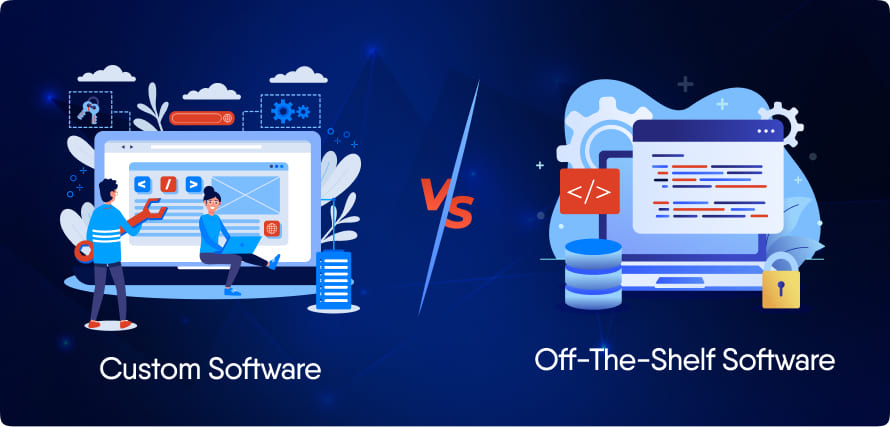
          Custom Software Vs Off The Shelf Software

          In 2026, software is no longer just a support function, it directly shapes how businesses operate, scale and compete. According to industry studies, more than 70% of digital transformation projects underperform due to poor software alignment, making the choice between custom software and off-the-shelf software solutions increasingly critical.

          While off-the-shelf tools promise speed and affordability, many organizations experience limitations as they grow. On the other hand, businesses that invest in customized systems often gain stronger operational efficiency and long-term cost control. This guide explains the differences in clear, practical terms to help decision-makers choose the right solution with confidence.

          What Is Custom Software?

          Bespoke software is crafted to match the way your business operates, focusing on your goals, workflows, and unique challenges. Rather than making your team adjust to one-size-fits-all systems, it adapts to the way you actually work. 

          The custom software development process typically includes requirement analysis, system design, development, testing, and ongoing optimization. This approach is particularly prevalent in industries such as healthcare, logistics, and finance, where compliance, scalability, and security are non-negotiable requirements.

          For example, a logistics firm struggling with delayed deliveries replaced multiple disconnected tools with a custom route optimization platform. As a result, the company achieved a 15–20% reduction in fuel costs, something standard software could not deliver without major compromises.

          What Is Off-the-Shelf Software?

          Off-the-shelf software refers to pre-built applications designed for mass adoption. These solutions are readily available, easy to deploy, and typically offered on subscription-based pricing models. They work well for standardized needs such as accounting, customer relationship management, and basic project tracking.

          Research shows that nearly 60% of small businesses initially adopt off-the-shelf software due to low upfront costs and minimal setup requirements. However, limitations become evident as businesses scale.

           A retail company using a generic inventory tool, for instance, may struggle with demand forecasting during peak seasons. Many organizations eventually supplement such tools with custom-built components to close functionality gaps.

          For a broader strategic perspective, the Custom-built software solutions explain how customized systems support long-term digital success.

          Bespoke software caption

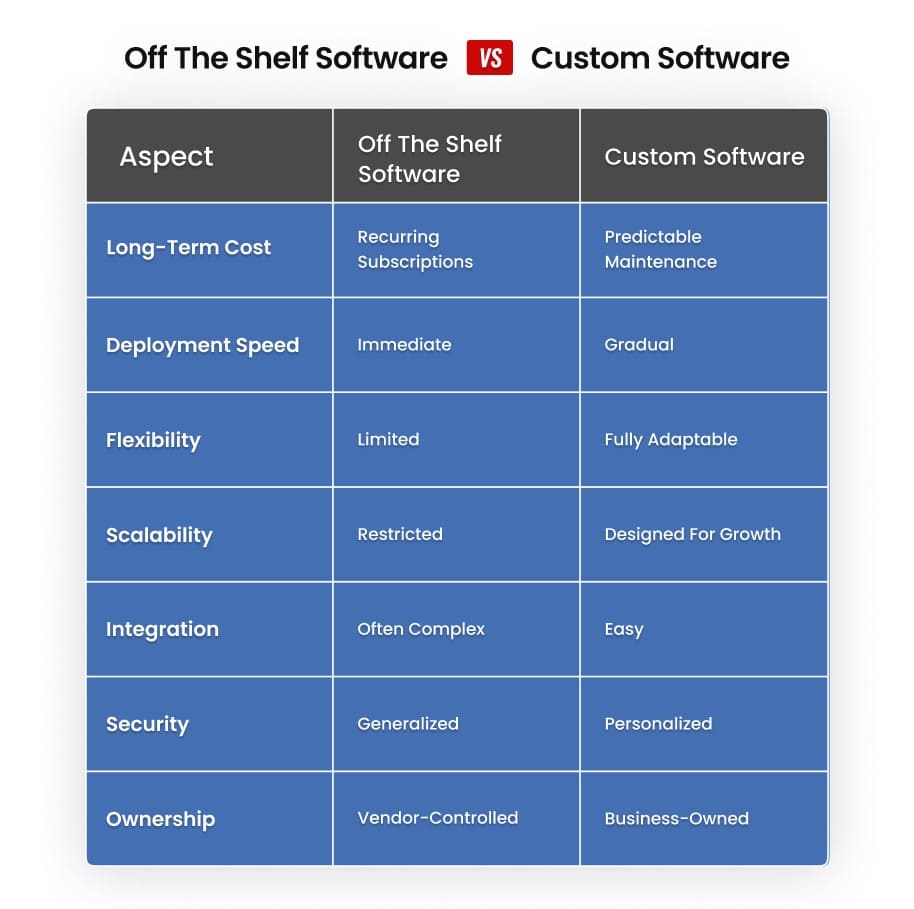
          Detailed Comparison Of Bespoke Software vs Off-the-Shelf Software

          This comparison highlights a fundamental difference: off-the-shelf software prioritizes convenience, while bespoke software prioritizes alignment and long-term control.

          Comparison of Custom vs Prebuilt Software

          Bespoke Software Development Solutions: Is It Worth the Investment Over Pre-Built Software

          Prebuilt software may seem cost-effective at first, but hidden expenses, such as rising subscription fees, paid add-ons, and costly integrations, can add up quickly. SaaS costs can grow 30 to 50 percent within three years.

          Bespoke software require higher upfront investment but provides full control, transparency, and ownership. Businesses avoid recurring fees, gain scalable systems, and achieve long-term efficiency and savings.

          Unlock Your Bespoke Software Solution Today? Let SolCoders Transform Your Business.

          Advantages and Limitations of Custom and Off-the-Shelf Software​

          Custom Software

          Bespoke software development services are built specifically for your business, ensuring alignment with unique workflows and long-term goals.

          Advantages

          These are the benefits that make custom software a strategic choice for businesses aiming for growth and efficiency.

          • Every feature is crafted to solve specific problems within your organization.
          • It supports future growth without requiring a platform switch.
          • Data flows smoothly across your business tools, improving efficiency.
          • Reduces risk and ensures adherence to regulatory requirements.
          • Investing upfront often pays off through efficiency and control.

          Disadvantages

          Some limitations may affect businesses as they grow or as they have specific needs.

          • You may need workarounds or additional tools to meet your needs.
          • May not support business growth or complex requirements.
          • Often difficult to connect with existing systems without extra tools or middleware.
          • Subscription fees and add-ons can add up over time.
          • Relying on a third-party company for updates, features, and support limits control.

          Off-the-Shelf Software

          Pre-Built Software for general use provides a quick solution for standard business tasks.

          Advantages

          These features make off-the-shelf software a popular choice for companies needing speed and low upfront costs.

          • Perfect for small businesses and startups looking for budget-friendly solutions
          • Ready to use immediately, which saves implementation time.
          • Keeps the system reliable without extra effort from your team.
          • Widely used, tested, and stable software with a track record.
          • Users can start using the software without specialized development knowledge.

          Disadvantages

          Some limitations may affect businesses as they grow or as they have specific needs.

          • You may need workarounds or additional tools to meet your needs.
          • May not support business growth or complex requirements.
          • Often difficult to connect with existing systems without extra tools or middleware.
          • Subscription fees and add-ons can add up over time.
          • Relying on a third-party company for updates, features, and support limits control.

          How Businesses Actually Decide in 2026

          Many decision makers assume off-the-shelf software can be customized enough to meet evolving needs. In reality, most tools only allow surface-level configuration. This often forces teams to adapt workflows rather than improve them, reducing productivity.

          Companies that invest in software development services see faster operational gains after deployment. For instance, a mid-sized eCommerce business reported a 40% improvement in order processing speed within six months of implementing a custom backend system.

          Scalability is another decisive factor. Businesses with growth plans often find that generic tools cannot adapt quickly enough, which is why many organizations choose to hire software developers for scalable, tailored solutions.

          Looking to Innovate and Lead? Our team builds smart solutions that grow with your business.

          The Rise of Hybrid Software Strategies

          In 2026, many businesses adopt hybrid software strategies, combining off-the-shelf solutions for standard tasks with custom software development services for critical operations. This approach blends speed, reliability, and tailored functionality.

          For example, a retail brand may run its storefront on an off-the-shelf eCommerce platform while integrating a custom inventory and analytics system. This ensures smooth software integration, boosts operational efficiency, and allows scalable growth.

          By leveraging hybrid solutions, companies balance quick implementation with long-term control, making their software solutions adaptable to evolving business needs.

          Choosing the Right Development Partner

          When businesses transition toward custom solutions, selecting the right development partner becomes essential. Experience, technical expertise and post-launch support matter more than cost alone.

          Many decision-makers consult resources such as Best Custom Software Development Companies In USA 2026 to identify reliable providers and reduce implementation risk.

          Final Thoughts

          The decision to use custom software compared with off-the-shelf software in 2026 is strategic rather than purely technical. Off-the-shelf tools deliver speed and simplicity, while custom solutions offer flexibility, scalability, and long-term value.

          However, if you’re ready to implement a solution that fits your business perfectly, SolCoders can help. Whether you need a fully bespoke platform or hybrid integration with existing tools and provide end-to-end custom software development services that deliver measurable ROI.

          SolCoders combines innovation and technology to deliver scalable, high-performance software solutions that streamline operations and accelerate digital transformation

          In This Article

            Frequently Asked Questions:

            What is the main difference between custom software and off-the-shelf software?

            Custom software is tailored to a business’s unique workflows and goals, while off-the-shelf software is pre-built with standard features for general use.

            Development time depends on project complexity from simple systems to large-scale, complex solutions, and SolCoders ensures timely delivery.

            Yes, custom software might cost more upfront, but it gives your business the flexibility, scalability, and ROI you need to grow confidently.

            Only basic configurations are possible. Advanced needs require software development services.

            Related Blogs

            Book a 30-minute call with our experts.

            Custom Software Development: Complete Guide for Modern Businesses

            Custom Software Development: Complete Guide for Modern Businesses
            image 1880 1

            Written By : Sualeha

            Seo Executive

            Custom Software Development

            In today’s fast-changing enterprise landscape, technology can either accelerate your growth or quietly hold it back.

            Organizations often adopt digital tools meant to drive innovation, but instead, they complicate workflows. The challenge isn’t the tech, it’s the misalignment with business needs.

            Software development services are designed to grow with your business, make your teams more effective, and give you full control over how your company evolves.

            Why Custom Software Development Is Becoming More Essential?

            Agility is key for startups, eCommerce brands and businesses of all sizes and types. Pre-packaged platforms often lead to challenges around rigid workflows, integration limitations, or scalability roadblocks.

            According to a Forrester report published in 2025, 72% of surveyed companies adopted a custom-built solution and were able to indicate measurable improvements to efficiency and decision-making. Custom software isn’t just a technical application, it is a long-term plan for growth, flexibility, and ensuring a perfect fit and optimal performance.

            Understanding the Levels of Custom Software Complexity

            Every custom software project is unique, and its complexity directly impacts the time, effort, and resources required. Here’s a quick look at how different project types typically vary:

            Simple Software

            These solutions focus on essential features such as user authentication, data management, and straightforward reporting. They often include clean, functional interfaces and limited integrations ideal for startups launching their first digital product or internal tool.

            Medium Complexity Software

            At this level, projects involve more sophisticated features like advanced user roles, custom analytics, and multiple system integrations. These solutions often include mobile responsiveness and API connectivity, making them a great fit for growing e-commerce brands or service-based businesses looking to streamline operations.

            Advanced Software

            Highly complex projects leverage cutting-edge technologies such as AI, machine learning, real-time data processing, and multi-platform support. These systems are designed for enterprises that need scalability, advanced security, and seamless performance across large user bases and multiple departments. No matter the scale or complexity, the key is aligning your software’s capabilities with your business goals. A well-planned, custom-built solution ensures flexibility, growth, and a lasting competitive edge.
            Group 1597882657

            What Custom Software Development Really Means

            Bespoke software development is the process of designing, building, and maintaining software that’s made specifically for your business model, workflows, and customer needs.

            Our experts understand how your team works and the challenges you face, not just gather requirements. Then, we find ways to use automation and integration to make your day-to-day work smoother, more efficient, and more impactful.

            From AI-driven dashboards to scalable platforms, every project is built to align perfectly with your operational goals.

            Key Benefits of Custom Software Development

            1. Built for Your Business

            Our team built Custom software development to fit your business processes and workflows perfectly. It solves specific challenges, streamlines operations, and provides features that align with your goals.

            2. Scalable Solutions

            As your business grows, your software can evolve with it. You can add new functionalities, support more users, and expand capabilities without having to replace the system.

            3. Seamless Integration

            Custom software integrates with your existing tools and platforms, ensuring smooth data flow and consistent information across teams and departments.

            4. Enhanced Security

            Control every aspect of security, from access levels to encryption, ensuring that sensitive business data stays protected and compliant with standards.

            5. Cost-Effectiveness in the Long Run

            While the initial investment may be higher, custom software can lead to significant cost savings over time by improving efficiency and reducing the need for multiple software licenses.

            Want to make your operations seamless and efficient? Get tailored solutions today

            Industries Benefiting from Custom Software

            Meanwhile, every industry has unique needs. We offer tailored solutions that address specific challenges across various industries. Here’s how different sectors leverage custom software to enhance their operations:

            Streamlining Patient Care and Operations

            Custom software helps healthcare providers manage patient records, appointments, and workflows efficiently, allowing teams to focus on delivering quality care.

            Secure and Smarter Financial Management

            Banks and financial institutions leverage tailored software to automate reporting, monitor risks, and secure transactions, enabling faster and more informed decision-making.

            Enhancing Customer Experiences

            Retailers and online stores use custom solutions to personalize shopping, manage inventory effectively, and boost customer engagement, driving higher sales.

            Optimizing Production and Supply Chains

            Manufacturers and logistics benefit from software that streamlines production schedules, tracks supply chains, and maintains product quality, ensuring smooth and efficient operations.

            Modernizing Learning and Administration

            Schools and training centers implement custom software for learning management, student tracking, and digital assessments, creating more organized and interactive educational experiences.

            How We Deliver Software That Performs

            Step 1: Built Discovery

            We start by understanding your business challenges, model and goals. This enables us to pinpoint where custom software can make the biggest impact, whether it’s streamlining operations for a startup, managing complex e-commerce workflows or optimizing enterprise systems.

            Step 2: Design & Prototyping

            Our UI/UX designers craft user-friendly interfaces and also provide the best prototypes to ensure the final product fits seamlessly into your workflows and maximizes user adoption from day one.

            Step 3: Agile Development

            We deliver working features in phases, keeping you updated throughout the development. This allows startups, brands, and enterprises to stay engaged and ensure the software meets their needs

            Step 4: Testing & Quality Assurance

            Our QA experts rigorously test for performance, security and scalability. This ensures your software is reliable and efficient, whether it’s powering a small business or a multi-department enterprise.

            Step 5: Deployment & Ongoing Support

            We don’t just launch and leave. Our team monitors, maintains, and enhances your solution as your business evolves. This guarantees long-term performance, reliability and alignment with your growth strategy.

            Modern challenges need modern solutions. From MVP to full-scale platform. We’ll help you every step of the way

            Why Businesses Choose Solcoders for Custom Software Development

            Whether a startup launching the first product, an e-commerce brand aiming to scale, or an enterprise managing complex operations. Our team of experts builds systems and here’s why our approach stands out:

            Build Software That Solves Real Problems

            We design every feature to tackle actual business challenges, helping startups streamline operations, letting e-commerce platforms manage thousands of orders efficiently, and empowering enterprises to optimize complex workflows.

            Scalable Software Solutions

            Our software grows with you. Startups can introduce new features easily, e-commerce brands navigate busy seasons without stress, and enterprises can scale their systems smoothly.

            Smooth Integrations

            We connect your new software with existing platforms like CRM, ERP, analytics, or payment systems so teams stay coordinated, processes run smoothly, and data flows accurately.

            Secure Data

            We embed encryption, access controls, and compliance standards into the software itself, so startups, e-commerce brands, and enterprises all have a secure foundation for their operations.

            Collaborative Partnerships

            We work side by side with your team, guiding adoption, gathering feedback, and continuously improving your software so it remains a powerful business tool long after launch.

            Final Thoughts

            Custom software development is more than just designing apps or systems, it’s also about developing tools that increase the effectiveness and efficiency of your company. Startups, e-commerce brands, and large enterprises all benefit from solutions that scale with growth, simplify operations, and deliver better experiences for customers.
            At Solcoders, we deliver a solution that truly supports your business goals, helping you work more efficiently, innovate faster, and stay ahead of the competition. Get your free consultation and turn complex workflows into simple, scalable solutions.

            SolCoders combines innovation and technology to deliver scalable, high-performance software solutions that streamline operations and accelerate digital transformation

            In This Article

              Frequently Asked Questions:

              How long does it take to develop custom software?

              It depends on the project’s complexity. Simple solutions are quicker to launch, while larger systems with advanced features take longer to ensure quality and reliability.

              Absolutely. Our solutions grow with your business, supporting more users, features, and workloads without disrupting operations.

              Yes. We seamlessly connect your software with CRMs, ERPs, analytics platforms, and payment systems to keep workflows smooth.

              Costs vary based on project size, features, and integrations. We provide a transparent plan tailored to your business needs and budget.

              Related Blogs

              Book a 30-minute call with our experts.