Enterprise Software Development

Enterprise Software Development Services

Enterprise software development services help organizations build, integrate, and modernize software for complex workflows, multiple user roles, and connected business systems. SolCoders develops custom enterprise solutions that align with your operational requirements, existing technology, and growth plans.

Enterprise Software Solutions We Build for Complex Business Operations

Get full-cycle delivery or support for any stage of your enterprise software project.

Enterprise Software Consulting

Get a clear technical direction before committing to development. Consulting covers requirements, workflows, current systems, integration needs, architecture, modernization options, delivery scope, risks, and cost factors so your team can make informed decisions before development begins.

Custom Enterprise Software Development

Build custom enterprise software around your workflows, business rules, user roles, data, and integration requirements. Solutions can include internal management systems, customer and partner portals, workflow platforms, transaction systems, and reporting tools for processes that standard software cannot support effectively, with broader capabilities available through our custom software development services.

Enterprise Web Development

Build high-performing websites, portals, and web platforms for complex business requirements. Enterprise web development can cover authenticated user areas, customer and partner portals, custom dashboards, backend integrations, APIs, databases, content management, role-based access, and workflows that support day-to-day digital operations.

Enterprise Application Development

Develop secure, scalable applications for employees, customers, suppliers, partners, and administrators. Applications can include dashboards, approval systems, document workflows, account management, reporting tools, operational platforms, and multi-department processes built around specific user roles and business requirements.

ERP Software Development Services

Bring key business functions into a more connected operational system. ERP development can include custom modules, workflow automation, reporting, permissions, integrations, and data migration across finance, purchasing, inventory, sales, fulfillment, and operations without replacing systems that still provide value

Enterprise System Development

Create a technical foundation that can support multiple applications, teams, and business processes. System development can cover APIs, databases, identity services, background processing, queues, event-driven workflows, monitoring, and deployment architecture based on expected workload, reliability, security, and integration requirements.

Enterprise Software Integration

Connect ERP, CRM, accounting, ecommerce, payment, warehouse, analytics, and other business systems so data and processes can work across platforms. Integration services can cover API connections, authentication, data mapping, synchronization, webhooks, error handling, and monitoring based on how your systems need to exchange information.

Legacy Application Modernization

Improve older systems without forcing an unnecessary full rebuild. Modernization can address outdated frameworks, limited integrations, poor performance, maintenance costs, and scalability issues through refactoring, API development, interface upgrades, cloud migration, database changes, or phased re-architecture.

AI Development for Enterprise Applications

Apply AI to business processes where it can improve speed, consistency, and decision support. Our custom AI enterprise software development services can include document processing, enterprise search, knowledge retrieval, recommendations, conversational interfaces, and workflow automation, with clear controls for data access, privacy, accuracy, and human review.

Enterprise Software Testing

Reduce release risks by testing how the system performs across real business scenarios. QA can cover functionality, integrations, permissions, workflows, data accuracy, performance, security, usability, and failure conditions before launch or major updates.

Enterprise Software Maintenance & Support

Keep business-critical systems reliable after launch. Ongoing support can include issue resolution, integration updates, dependency upgrades, performance improvements, security fixes, feature development, and technical maintenance under clearly defined support and release procedures.

Replace Software Gaps With a System Built for Your Business

We develop, integrate, or modernize the systems your business relies on to manage critical operations.

How Enterprise Software Connects Your Operations

Enterprise software connects users, business rules, data, and integrated systems to support consistent business processes across departments and applications.

Managing Risk Across Enterprise Software Projects

Our team of experts identifies common risks early through clear requirements, technical reviews, testing, security controls, monitoring, and staged releases.

Risk

Changing Requirements

Scope Expansion

Legacy System Constraints

Integration Failures

Data Migration Issues

Security and Access Gaps

Performance Limitations

Low User Adoption

How We Address It

Set priorities, document decisions, and define acceptance criteria.

Assess new requests against effort, dependencies, value, and release plans.

Review existing systems early and plan suitable modernization steps.

Validate data flows, retries, error handling, logging, and recovery.

Check data quality, mappings, test migrations, and final reconciliation.

Use role-based access, authentication controls, secure credentials, and security testing.

Test expected workloads, review database performance, and track system behavior.

Validate workflows with users, provide training, and introduce changes in stages.

Our Enterprise Software Development Process

Our process keeps business requirements, technical decisions, development, testing, and deployment aligned from planning through post-launch support.

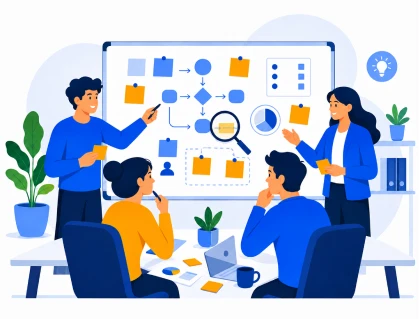
Discovery and Process Analysis

We assess the current process and define what the new system needs to improve.

This stage includes:

  • Map users, workflows, bottlenecks, and business goals
  • Review existing software, data sources, integrations, and dependencies.
  • Identify stakeholders, constraints, risks, and decision owners.
Discovery and Process Analysis

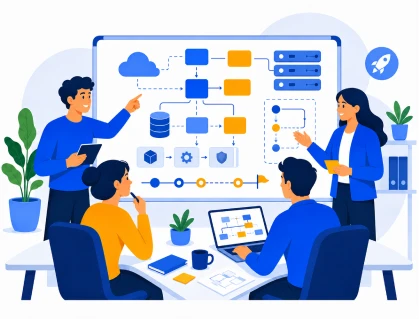
Requirements and Scope Definition

We convert business needs into clear functional and technical requirements.

This stage includes:

  • Define features, roles, permissions, integrations, and reporting needs.
  • Separate launch requirements from future improvements.
  • Document business rules, assumptions, exclusions, and acceptance criteria.
Requirements and Scope Definition

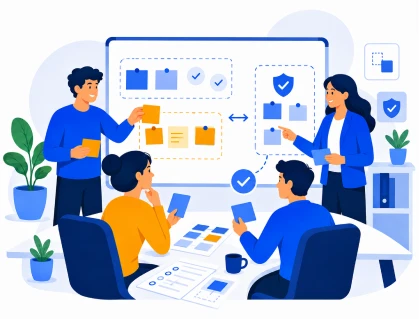
Architecture and Delivery Planning

We define how the software will be structured and delivered.

This stage includes:

  • Plan application, database, API, integration, and infrastructure architecture.
  • Define delivery phases, testing requirements, environments, and release controls.
  • Evaluate development, integration, or modernization options where needed.
Architecture and Delivery Planning

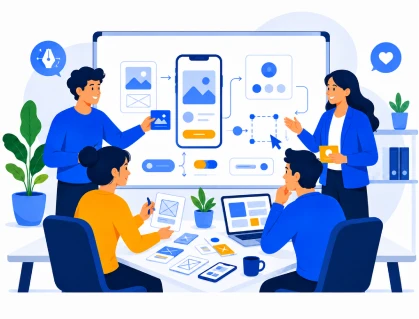
UX and Interface Design

We design interfaces around the tasks users need to complete.

This stage includes:

  • Map key user journeys and frequent workflows.
  • Create wireframes or prototypes for review.
  • Plan permissions, validation, error states, and accessibility.
UX and Interface Design

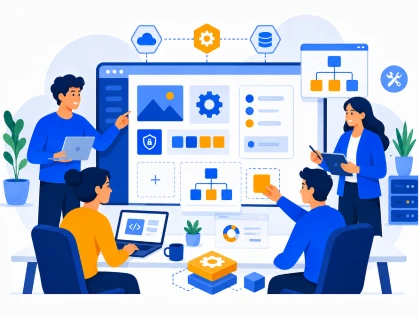
Enterprise Software Development

We set up secure access and permissions for connected systems.

This stage includes:

  • Develop frontend, backend, database, API, and integration components.
  • Review code, document key decisions, and manage approved changes.
  • Demonstrate completed workflows throughout development.
Enterprise Software Development

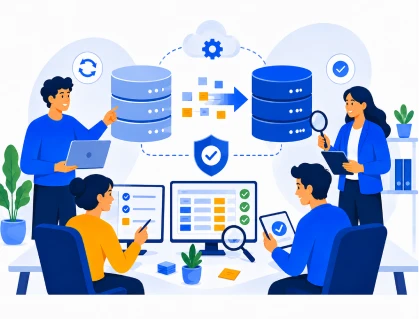
Data Migration and Testing

Before release, the software is tested across connected systems and real operational scenarios.

This stage includes:

  • Test functionality, permissions, integrations, performance, and failure cases.
  • Validate data migration, reconciliation, and rollback where required.
  • Complete regression and user acceptance testing against agreed requirements.
Data Migration and Testing

Deployment and Post-Launch Support

We prepare the software for release and support it after launch.

This stage includes:

  • Configure production, backups, monitoring, and release steps.
  • Confirm documentation, support ownership, and incident procedures.
  • Monitor performance, integrations, and critical workflows, and address issues after launch.
Deployment and Post-Launch Support

Who Can Benefit From Custom Enterprise Software?

Manage Sales Channels

01

Startups

Build internal tools, customer portals, or business platforms that can support growing teams, users, and operations.
Frame 2147225100

02

SMEs

Replace spreadsheets, manual work, and disconnected tools with one system for workflows, approvals, reporting, and daily operations.
Frame 2147225100 1

03

Enterprises

Manage complex processes across departments, locations, and user roles with software built around specific business rules and data requirements.
Frame 2147225101

04

D2C & eCommerce Brands

Support growing operations with custom tools for managing products, orders, customer service, reporting, and other operational workflows.

Industries We Serve as Your Enterprise Dev Partner

SolCoders develops enterprise software for businesses across industries, aligning each solution with their workflows, users, data, integrations, and technical requirements.

Retail and ECommerce

Retail and ECommerce

Fashion and apparel ecommerce solutions for online clothing stores

Fashion & Apparel

On-demand solutions for digital services, delivery platforms, and customer-focused businesses

On-Demand Solutions

FinTech solutions for digital payments, financial services, and modern banking platforms

FinTech

Healthcare solutions for digital health services, medical platforms, and patient care systems

Healthcare

Education solutions for online learning platforms, eLearning systems, and digital education services

Education

Travel solutions for booking platforms, tourism services, and digital travel experiences

Travel

Logistics solutions for supply chain management, delivery services, and transportation platforms

Logistics

Automotive solutions for car services, vehicle platforms, and digital mobility experiences

Automotive

Gaming solutions for game development, mobile gaming platforms, and interactive digital experiences

Gaming

Fitness solutions for workout apps, health platforms, and digital wellness services

Fitness

Sports solutions for fitness apps, sports platforms, and digital athletic experiences

Sports

Why Businesses Choose Custom Enterprise Software

Purpose-built systems give businesses more control over how software supports operations, users, data, and growth. They can address process gaps, support specialized requirements, improve visibility across functions, and adapt as business needs change without forcing teams into the limitations of standard software.

Choose Custom Enterprise

Our Achievements

Verified Excellence Across Trusted Marketplaces

Why Choose SolCoders as Your Enterprise Software Development Company?

SolCoders takes a practical approach to enterprise software projects by reviewing business requirements, technical constraints, existing systems, and long-term ownership before development starts. We keep scope, integrations, testing, and delivery aligned throughout the project so that decisions remain clear and the final solution fits how the business actually operates.

Frequently Asked Questions

What is enterprise software development?

Enterprise software development is the process of building, integrating, or modernizing software that supports complex business operations, multiple users, workflows, data sources, and connected systems.

It works by receiving data from users and connected systems, applying business rules and access permissions, processing workflows, updating records, and sharing relevant information across teams and applications.

Enterprise software is built by defining requirements, designing the system architecture and workflows, developing the application, integrating databases and other systems, testing real use cases and deploying it to users.

It may be the right choice when existing systems create repetitive manual work, cannot integrate required data or applications, limit workflow control, or require extensive customization to support core operations.

Off-the-shelf software comes with standard features and workflows for broad use. Custom enterprise software is built around a company’s specific processes, user roles, integrations, data requirements, and operational needs.

Cost depends on project scope, workflows, integrations, user roles, data migration, security, infrastructure, and testing requirements. A reliable estimate usually follows a review of the existing systems and required functionality.

Enterprise software projects may take a few months, while larger systems can take longer depending on scope, integrations, data migration, and technical complexity.

Yes, in many cases. Legacy systems can be connected through APIs, middleware, database interfaces, file exchange, webhooks, or custom adapters, depending on available access and technical limitations.

Replace Operational Workarounds With Purpose-Built Software

SolCoders builds software that eliminates recurring system gaps and more effectively supports critical business operations.