
API integration services help businesses connect software, automate data exchange, and keep systems working together without manual data handling. SolCoders integrates CRMs, ERPs, eCommerce platforms, payment systems, SaaS applications, and legacy software through secure custom and third-party APIs.
Connect Your Business Systems Through API Integration
Every system handles data and workflows differently. We assess how your applications need to connect, then use APIs, custom endpoints, middleware, webhooks, and secure authentication to build reliable API integration solutions.
Custom API Development
Build new endpoints, private APIs, partner APIs, and custom API layers through custom API development and integration for SaaS products, mobile apps, internal tools, and backend systems.
Custom API Integration
Our custom API integration services connect applications based on your workflows, data structures, authentication, and business logic. We handle endpoint configuration, field mapping, data transformation, error handling, and synchronization. Projects requiring custom applications or internal platforms can be supported through our custom software solutions.
Third-Party API Integration
Connect CRMs, ERPs, payment systems, shipping platforms, accounting tools, marketplaces, and SaaS products through reliable third-party API integration services. We handle authentication, webhooks, data mapping, rate limits, retries, and testing.
REST API Integration Services
Use REST API integration services to connect web apps, mobile apps, SaaS platforms, and business systems through REST endpoints. We handle JSON exchange, authentication, pagination, validation, rate limits, and error handling.
GraphQL API Integration Services
Connect applications to GraphQL API integration services via queries and mutations. We configure authentication, variables, response mapping, error handling, and application-specific data workflows.
SOAP API Integration Services
Integrate enterprise and legacy systems using SOAP API integration services built around XML and WSDL-based communication. We handle authentication, structured requests and responses, and error handling.
Cloud API Integration
Connect SaaS platforms, cloud applications, storage services, reporting tools, and internal systems through cloud API integration with real-time, scheduled, or event-driven data exchange.
Legacy System API Integration
Modernize connectivity between older software and newer applications through legacy system API integration using existing APIs, middleware, custom adapters, or new API layers. Our enterprise systems integration guide covers broader multi-system environments.
API Data Synchronization
Keep customer, product, order, inventory, account, transaction, and operational data consistent with API data synchronization using real-time, scheduled, one-way, or two-way data flows.
Turn disconnected applications into reliable, automated data flows with the right API integration.
Our API Development and Integration Process
From initial assessment to post-launch support, we build API integrations around your systems, data requirements, and operational needs.
Discovery and Integration Planning
The process starts by assessing the applications involved and defining the integration requirements.
This stage includes:
- Review API documentation, endpoints, and system capabilities.
- Identify required data, dependencies, and business rules.
- Define the integration scope and technical approach.

Data Mapping and Architecture
Next, we establish how information will be structured and transferred between systems.
This stage includes:
- Map source and destination fields.
- Define transformation and synchronization rules.
- Plan the integration architecture, middleware, and event flows.

API Development and Integration
We develop and configure the connection required between your applications.
This stage includes:
- Connect and configure available APIs.
- Build custom endpoints when existing APIs are insufficient.
- Implement webhooks or middleware for required workflows.

Authentication and Security
We set up secure access and permissions for connected systems.
This stage includes:
- Configure OAuth, API keys, JWT, access tokens, or supported methods.
- Define permissions and access scopes.
- Protect requests and data transmitted between applications.

Quality Assurance
The integration is tested across normal workflows and failure scenarios to confirm reliable performance.
This stage includes:
- Test requests, responses, and mapped data.
- Check rate limits, validation rules, and error handling.
- Confirm accurate and consistent synchronization.

Deployment and Monitoring
Moved into production and verified for accurate API communication and workflow execution
This stage includes:
- Deploy the approved configuration.
- Validate production workflows and system communication.
- Track failures, response issues, and integration health.

Ongoing API Maintenance
Support continues as APIs, platforms, and business requirements evolve.
This stage includes:
- Adapt integrations to API or provider updates.
- Troubleshoot connection and synchronization issues.
- Maintain compatibility with connected systems.

How API Integration Works
From initial assessment to post-launch support, we build integrations around your systems, data requirements, and operational needs.
Business Event or Request
The process begins when an event occurs, such as a new order, a customer update, a completed payment, an inventory change, or a data request.
API Endpoint or Webhook
The source system sends or exposes the required data via an API endpoint or webhook, depending on the integration workflow.
API Authentication
OAuth, API keys, access tokens, JWT, or other supported authentication methods verify that the requesting application is authorized to access the API.
Data Mapping and Validation
Incoming data is validated, matched to the required destination fields, and transformed when the connected systems use different formats or structures.
Data Processing and Synchronization
The destination system creates, updates, retrieves, or synchronizes the required information based on predefined business rules.
Error Handling and Retries
Failed requests, invalid data, or unavailable endpoints are logged and can be retried or flagged for review based on the integration requirements.
API Monitoring
Ongoing monitoring helps identify failed webhooks, authentication issues, endpoint errors, unexpected responses, and data synchronization problems after deployment.
What Can Be Connected Through API Integration?
Integration scope depends on available APIs, authentication permissions, accessible endpoints, provider limitations, and data requirements.
System or Function
CRM systems
ERP systems
eCommerce platforms
Payment providers
Shipping and logistics systems
Accounting platforms
Inventory systems
Marketing platforms
SaaS applications
Mobile applications
Custom business software
Legacy software
Webhooks
Real-time synchronization
Two-way synchronization
Private APIs
Integration Support
Usually supported through available APIs
Usually supported
Depends on provider API access
Usually supported
Depends on available endpoints
Usually supported
Usually supported
Usually supported
Usually supported
Requires technical assessment
Depends on available interfaces
Supported where provider allows
Depends on API capabilities
Requires source-of-truth rules
Requires authorized access
API Integration Risks and How We Address Them
Features
Integrations can fail when authentication, data mapping, API limits, provider changes, or error handling are not planned correctly. We identify these issues before production deployment
Authentication Failures
Expired tokens, changed credentials, or revoked permissions can interrupt API access. Authentication is configured using the provider-supported method, with token renewal and access-error handling added where required.
Incorrect Data Mapping
Connected systems may store the same information using different fields, formats, or structures.Our team maps and transforms source data to match the destination system, then validates representative records before production synchronization.
API Rate Limits
Third-party providers may restrict the number or frequency of API requests. Request volume is managed through batching, queues, synchronization schedules, or retry logic based on documented API limits.
Failed Webhooks
Webhook events may fail because of invalid payloads, temporary downtime, authentication errors, or unavailable endpoints .Validation, logging, retries, and duplicate-event protection are implemented where the workflow requires them.
Duplicate or Conflicting Data
Multiple systems may update the same record or process the same event multiple times.
Source-of-truth, synchronization, and conflict-handling rules are defined before two-way data exchange is implemented.
API Version Changes
Third-party providers may update or retire endpoints, authentication methods, or API versions. Our ongoing API monitoring and maintenance help identify these changes so affected endpoints, authentication flows, or integration logic can be updated.
Integration Downtime
Provider outages, network failures, timeouts, and unexpected responses can interrupt data exchange.logging and failure handling help identify interrupted requests, diagnose the cause, and limit their impact on connected workflows.
Who Can Benefit From API Integration Services?
01
Startups
02
SMEs
03
Enterprises
04
D2C & eCommerce Brands
Integration Support Across Key Industries
SolCoders develops integrations for businesses with different technology stacks, workflows, data requirements, and system dependencies.

Retail and ECommerce

Fashion & Apparel

On-Demand Solutions

FinTech

Healthcare

Education

Travel

Logistics

Automotive

Gaming

Fitness

Sports
Why Businesses Use API Integration Services
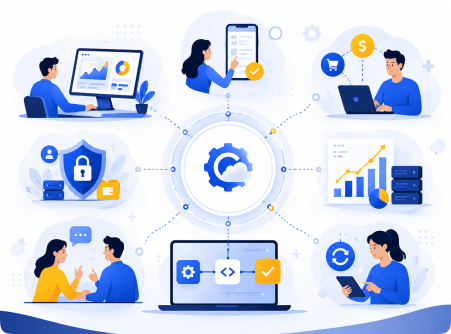
Businesses use API integration services when separate applications cause manual data entry, delayed updates, duplicate records, or broken workflows. APIs, webhooks, middleware, custom endpoints, and API orchestration can connect these systems, synchronize data, trigger actions between applications, and keep business processes running without replacing the existing software setup.
Why Choose SolCoders for API Integration Services?
SolCoders handles API assessment, architecture, development, authentication, testing, deployment, monitoring, and maintenance for both simple and multi-system integrations.
Our developers work with REST, GraphQL, SOAP, OAuth, webhooks, middleware, third-party APIs, cloud applications, custom software, and legacy systems, with a focus on secure data synchronization, error handling, and reliable system workflows.
What Our Clients Say
Frequently Asked Questions
What are API integration services?
API integration connects separate applications to exchange data and support shared business workflows through secure connections, data mapping, webhooks, testing, and maintenance.
How does API integration work?
Data moves between applications through API endpoints or webhooks. Each request is authenticated, checked, mapped to the required format, processed by the destination system, and logged or retried if it fails.
What are examples of API integrations?
Common examples include connecting payment gateways, CRM and ERP systems, e-commerce platforms, accounting software, shipping providers, inventory systems, marketing tools, authentication services, and custom business applications to exchange data and automate workflows.
How much does API integration cost?
Cost depends on the systems involved, available endpoints, authentication requirements, data volume, synchronization frequency, business logic, custom development, security needs, and testing scope.
Can SolCoders integrate third-party APIs?
Yes. SolCoders works with third-party APIs for CRM, ERP, eCommerce, payments, shipping, accounting, marketing, cloud applications, SaaS platforms, and other business systems, depending on the access and functionality provided.
Can legacy software be connected with modern applications?
In some cases, legacy software can be connected through available interfaces, middleware, custom adapters, database access, or a custom API layer, depending on the system’s technical limitations.
Integrate Smarter. Operate Better.
Get the right API integration approach for your systems, workflows, and business requirements.